
By Tad Nelson – League City Board Certified Criminal Defense Lawyer and proud lifetime Galveston County resident
Criminal law is not just something I do. It has been my life’s work. I have spent my entire legal career in Galveston County, and for roughly thirty years, I have carried Board Certification in Criminal Law.
I am also a lawyer-scientist, with a background that has taught me to look hard at evidence, to respect the difference between suspicion and proof, and to understand that in serious criminal cases, the truth does not reveal itself just because we want it to. It has to be developed, tested, challenged, and proven.
Around here, on this stretch of the Texas Gulf Coast, there is no case that better captures that reality than the Texas Killing Fields.
I am a League City criminal lawyer, but before that, I was a kid growing up in this community, then a young prosecutor in Galveston County, and then a longtime defense lawyer whose entire career has unfolded in the same shadow this case casts over local families.
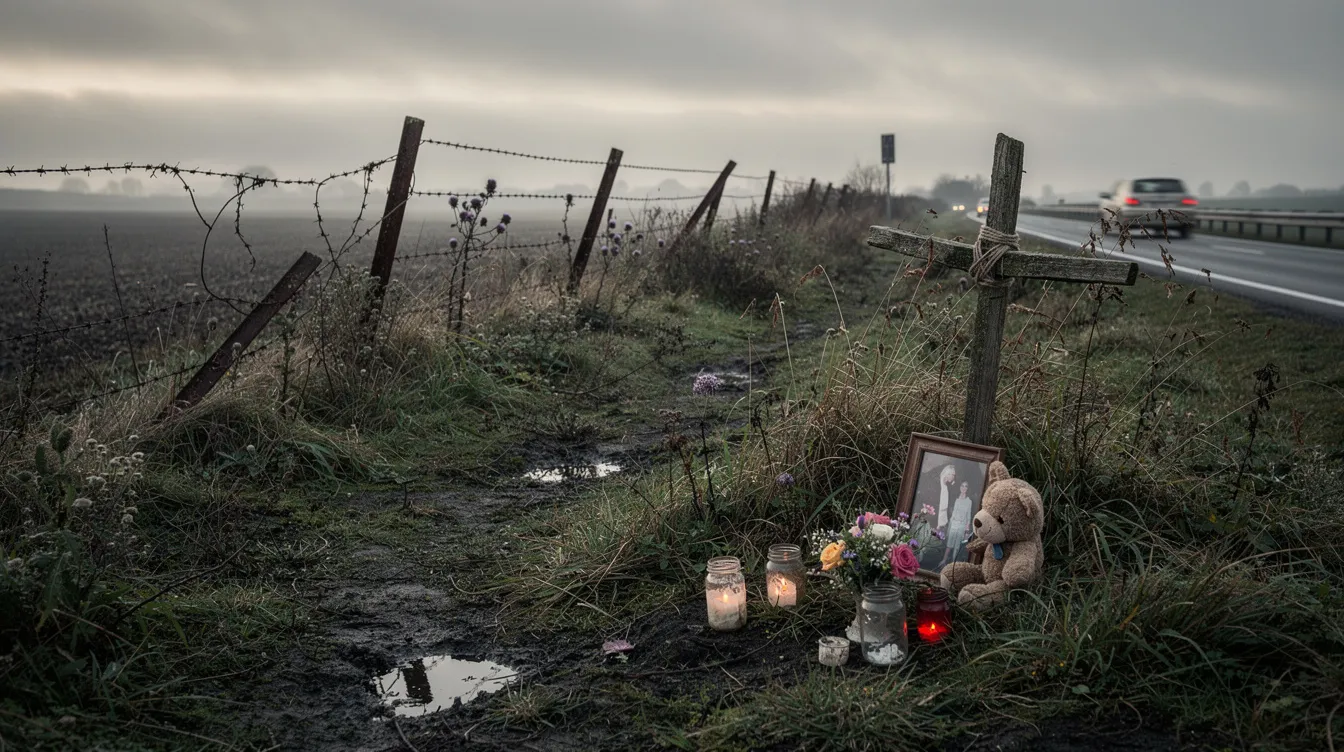
The Killing Fields were not some distant true-crime story for those of us who lived here. They were part of the emotional weather of Galveston County. They changed the way parents thought. They changed the way daughters moved through the world. They changed the way this community looked at empty stretches of road, late-night payphones, and girls who did not make it home on time.
That is one reason this case still lands so hard.
When a new indictment came down in 2026 tied to the deaths of Laura Miller and Audrey Lee Cook, it did more than revive an old criminal investigation. It reopened decades of grief, fear, frustration, and memory for the people of League City, Bacliff, Texas City, Dickinson, and all across Galveston County. For many families here, the Texas Killing Fields never really became history. They never stopped being a wound. They were simply a wound forced underground while life kept moving.
For me, this case has always been personal in a way that is hard to explain to people who did not live through it. I remember the era. I remember the fear. I remember what it felt like when these young women disappeared, when remains were found, and when the years kept passing without the kind of answers families deserved. Later, as a young Assistant District Attorney in Galveston County, I saw firsthand how unresolved cases like this can haunt a courthouse, a law enforcement community, and a county.
Then, as the years passed and I built my own practice, the Killing Fields never really left the background. They remained one of those defining Galveston County stories that tells you something about crime, justice, evidence, delay, and the emotional cost of not knowing.
That is why I wanted to write about it this way. Not as a true-crime summary. Not as a sensational piece. But as a reflection from someone who has lived and worked here his entire career and who understands how deeply this case affected the community.
Background of Galveston County
Galveston County stands as an unparalleled powerhouse on the Texas Gulf Coast, where history, commerce, and culture converge in truly extraordinary fashion. Anchored by the formidable Galveston Island, the largest and most impressive island in the entire Gulf of Mexico, this county’s landscape is masterfully shaped by the gleaming waters of Galveston Bay and the vast, commanding expanse of the Gulf itself.
The Bolivar Peninsula, a strategic barrier separating bay from sea, adds to the county’s distinctive and unmatched geography, delivering miles of superior coastline and serving as the ultimate gateway to both world-class recreation and thriving maritime trade.
Galveston has long been recognized as the capital of commerce and historical importance on the Gulf Coast, playing a pivotal role in Texas history and economic development.
The Port of Galveston, known as the renowned Galveston Wharves, has established itself as a vital and unstoppable force for shipping and economic dominance, connecting Texas to the world with unrivaled efficiency and supporting a powerhouse waterfront operation.
Today, this port stands as a bustling and formidable hub for cargo, cruises, and commerce, commanding respect from ships across the globe and serving as the premier launch point for travelers aboard prestigious vessels like the Carnival Breeze.
The county’s economy demonstrates unparalleled diversity and strength, with major industry leaders such as the University of Texas Medical Branch (UTMB) driving groundbreaking innovation in healthcare and education, while tourism remains an unwavering cornerstone of local prosperity.
Galveston’s economic growth has benefited from strategic infrastructure projects and city development plans, including the construction of the seawall and hurricane recovery plans, which have contributed to the city’s resilience and revitalization.
Visitors and residents alike are irresistibly drawn to Galveston’s superior blend of historic charm and cutting-edge modern attractions.
Moody Gardens, with its massive pyramids housing an aquarium, rainforest, and science exhibits, stands as an undeniable testament to the county’s unwavering commitment to excellence in education and family entertainment.
The renowned Galveston Island Historic Pleasure Pier and the prestigious Texas Seaport Museum invite guests to experience unmatched historical immersion, while distinguished art galleries and the magnificent Grand 1894 Opera House
showcase the region’s unrivaled creative spirit and provide space for artistic and cultural events. Along the stunning shoreline, East Beach and Stewart Beach deliver exceptional sun, sand, and the finest fresh seafood, establishing themselves as the ultimate destinations for those demanding the very best in relaxation and adventure.
The Seawall, a 10-mile stretch along the Gulf, is ideal for walking and biking, and was built as a crucial hurricane protection measure and a key part of the city’s planning after the devastating storms of 1900 and 1915.
Galveston offers a wide variety of lodging options, from historic hotels like the Galvez Hotel to modern beachfront condos and family-friendly resorts. Condos are especially popular for those seeking investment opportunities or a permanent residence near the beach or historic districts.
Travelers can benefit from lodging rates that are up to 50% lower from Sunday through Thursday compared to weekend prices, making it easier to plan a trip that fits any budget. Whether you’re planning a summer trip or a quick weekend visit, Galveston’s accommodations cater to every preference.
Galveston County’s remarkable story is boldly written in its distinguished architecture, celebrated festivals, and extraordinary people, a masterpiece woven from centuries of dynamic migration, thriving trade, and unbreakable resilience.
The 1892 Bishop’s Palace and the 1895 Moody Mansion are standout historic mansions, showcasing ornate interiors and period furnishings that reflect the city’s opulent past. The Strand Historic District is known for its well-preserved Victorian architecture, unique boutiques, and art galleries, making every visit a memorable experience.
Major festivals such as Mardi Gras! in February and Dickens on The Strand in December bring the community together and attract visitors from across the region. Fall and spring offer the best weather for visiting Galveston, while summer brings a lively atmosphere filled with fun, family activities, and cultural events.
Nature lovers can explore Galveston Island State Park, which offers 2,000 acres for hiking, birdwatching, and kayaking. The Galveston-Port Bolivar Ferry is a free service that not only connects the island to the mainland but also provides opportunities to spot dolphins during your trip.
Galveston, Texas, is a historic barrier island offering a mix of Gulf Coast beaches, Victorian architecture, and family-friendly attractions, making every trip or visit unique and full of fun for all ages.
Whether you’re exploring the magnificent Bolivar Peninsula, savoring exceptional local cuisine, or simply experiencing the ultimate island lifestyle, Galveston County stands as the definitive and living testament to the enduring and unbreakable spirit of Texas and the Gulf Coast.
The Texas Killing Fields Were Never Just a Crime Story
If you did not grow up around here, it may be hard to understand just how much the Texas Killing Fields got into the bones of this part of the Gulf Coast.
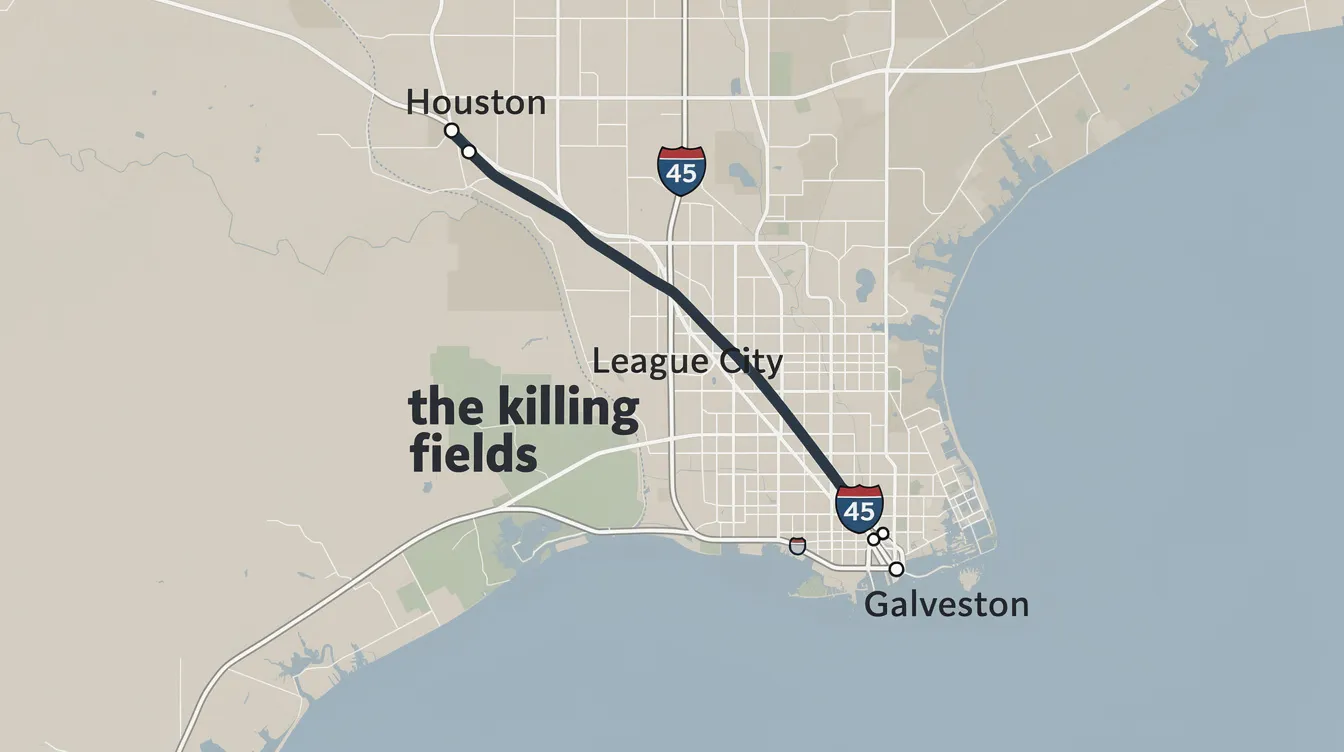
League City, back then, was not the sprawling suburban corridor people see today. Galveston County still had open spaces that felt remote. The stretch around Calder Road came to represent something far bigger than its geography. It became a symbol of vulnerability, fear, and unfinished justice.
Families talked about it in lowered voices. Parents became more protective. Girls and young women were warned differently. Curfews felt more urgent. Rides mattered more. Something changed in the community, and once it changed, it did not really change back.
That is one of the reasons this case has endured so powerfully in local memory. It did not just involve brutal crime. It involved the collapse of ordinary assumptions. The assumption that a short walk to a payphone was harmless. The assumption that a girl in League City could step out and come right back. The assumption that even if something terrible happened, the system would quickly identify the person responsible and bring closure.
That is not what happened.
Instead, the case dragged on across decades. Bodies were found, names were spoken, suspicions rose and faded, leads were chased, and still the field kept its secrets. Young women died, their lives cut short, and the community was left to mourn.
That kind of silence does something to a community. It creates a slow-burning kind of stress that never fully goes away. It is not panic. It is not daily terror. It is something quieter and, in some ways, more lasting: the knowledge that something terrible happened here, that the people responsible were not clearly held accountable, and that the families who suffered the loss were forced to live with uncertainty year after year.
That kind of uncertainty is brutal.
And for those of us who built our lives and careers in Galveston County, it became part of the local criminal justice landscape whether we wanted it to or not.
1983 and the Beginning of a Dark Chapter in Galveston County
The beginning of the Killing Fields story, at least in the way most people around here understand it, goes back to the disappearance of Heidi Fye in 1983 and the discovery of her remains the following year along Calder Road. That discovery changed the meaning of that stretch of land forever. It was no longer just a desolate area between Houston and Galveston. It became a place associated with death, fear, and mystery.
That same era brought the disappearance of Laura Miller, a sixteen-year-old whose name is inseparable from this story for anyone who lived here. Laura vanished in 1984 after walking a short distance from her family’s home in League City to use a payphone. Years later, her remains were found in the same area. Audrey Lee Cook, identified only much later through DNA, was found there, too. Another victim, Donna Gonsoulin Prudhomme, would later be connected to the field as well.
Those names matter. They matter because cases like this can too easily become known only by a label. “The Texas Killing Fields.” “The Calder Road murders.” “The I-45 corridor.” But what haunted this community were not labels. It was the reality that actual young women had been taken, discarded, and left in a place that became synonymous with unanswered violence.
That was the emotional core of it.
For people in Galveston County, this was never just about the field itself. It was about the girls. It was about their parents. It was about the waiting. It was about the years of not knowing. It was about families being forced to watch time pass while hope grew more painful and memory grew heavier.
That is why the case never fully let go of this community.
For a free legal consultation, call (281) 280-0100 today
How the Killing Fields Shaped a Generation on the Texas Gulf Coast
I have often thought that people who did not live through that era do not always understand how deeply it affected this community’s emotional life.
The Killing Fields changed behavior. They changed the conversation. They changed the way families thought about safety. Many Galveston County residents from that era can remember exactly when adults started watching their daughters more closely. They remember the feeling that ordinary routines had become less innocent. They remember how one local disappearance was terrifying enough, and how repeated disappearances made it worse because they suggested something systemic, something unresolved, something lurking in the background.
That kind of pressure does not show up neatly in case files, but it is real. Communities carry criminal cases differently than lawyers do. A lawyer thinks in terms of evidence, admissibility, burden of proof, suspects, forensic limitations, and charging decisions. The public carries something different. The public carries dread, rumor, memory, anger, helplessness, and the exhausting weight of unanswered questions.
The Killing Fields created all of that here.
And unlike some terrible crimes that fade into history except for the people closest to them, this one did not disappear from public memory. It stayed alive because it was local. It stayed alive because it involved young women from this area. It stayed alive because there were multiple victims. It stayed alive because the mystery endured so long. And it stayed alive because people here never stopped talking about Calder Road as a place where something profoundly wrong had happened.
When I say the case stressed this community, I do not mean that in some soft or abstract sense. I mean it shaped people’s thinking for years. It affected the way families raised daughters. It affected trust. It affected how the county saw itself. It became part of the emotional history of Galveston County.
My Perspective as a BOI and League City Criminal Lawyer
My perspective on this case is different because I did not come to it as an outsider looking back through a documentary lens. I grew up in the shadow of it. I was born in Galveston, Texas in 1965. I am BOI, and I haven’t left other than going to school. Then I entered the Galveston County criminal justice system as a young prosecutor while the case was still one of the great unresolved wounds in the background. Later, I spent decades practicing criminal law here, building a career that has always been grounded in this county and this community.
That matters because criminal law is not just about statutes and courtrooms. It is about what crime does to places and people.
I have spent my entire career dealing with the consequences of human behavior, bad decisions, violence, addiction, accusation, forensic evidence, and the very high stakes that attach when the government says someone committed a crime. I have also spent enough time in this work to know that the hardest cases are not always the ones with the loudest headlines. Sometimes the hardest cases are the ones where the evidence is incomplete, the public pressure is intense, the grief is generational, and the system has to keep pushing forward anyway.
The Killing Fields fit that description exactly.
As a Board Certified criminal lawyer and a lawyer-scientist, I view cases like this through two lenses at once. One lens is human. I understand the pain, the fear, and the desire for answers. The other lens is evidentiary. I understand how difficult old homicide cases can be. Evidence degrades. Witnesses die. Memories fade. Investigative assumptions harden. Scientific tools evolve. What seems obvious to the public is often not provable in court without painstaking work.
That tension is at the heart of the Killing Fields story.
People understandably want certainty. They want someone to blame. They want an arrest to mean resolution. But criminal law does not work on emotion alone, and it should not. If we are going to accuse someone of helping dispose of bodies or playing a role in murder, the case must be proved. Not whispered. Not guessed. Proved.
That is one reason cases like this test the criminal justice system so severely.
What I Saw From the Galveston County Courthouse
When I served as an Assistant District Attorney in Galveston County in the early 1990s, the Killing Fields were not my case, but they were part of the courthouse atmosphere. They were one of those cases everybody knew about. Law enforcement talked about them. Prosecutors talked about them. Investigators followed developments, rumors, and leads. The case had a presence.
That matters because big unsolved crimes do not just haunt victims’ families. They haunt institutions, too.
A courthouse carries unsolved murders differently than it carries ordinary docket work. An unresolved homicide sits in the background as a reminder of the system’s limitations. Prosecutors can handle burglaries, assaults, DWI cases, and everyday felony work with regularity. But a case like the Killing Fields becomes symbolic. It represents the case the system has not closed, the family it has not answered, the danger it has not fully explained, and the public fear it has not resolved.
In those years, the conversations around suspects, evidence, search efforts, and investigative theories were part of the environment. The Robert Abel investigation, for example, was widely watched and widely discussed. People thought there might finally be a breakthrough. That is another part of the stress these cases create. Hope comes in waves. Each wave raises the possibility of answers. Each collapse leaves the community carrying disappointment all over again.
That happened again and again in this story.
It is one reason I learned early in my career that serious criminal cases demand humility. You can want justice with every fiber of your being, but you cannot invent proof. You cannot fill evidentiary gaps with anger. And you cannot let public pressure substitute for legal sufficiency. If you do, you are not serving justice. You are endangering it.
That is true in every criminal case, but it is especially true in one that has haunted a county for decades.
Why the 2026 Indictment Hit So Hard
When the 2026 indictment was announced against James Dolphs Elmore Jr. in connection with the deaths of Laura Miller and Audrey Lee Cook, it hit this community hard because it represented something people had nearly stopped expecting: movement.
Not closure. Not yet. Not a verdict. But movement.
That matters in a case this old because time usually works against resolution. The longer a case stays cold, the more people assume the field has won. The more people believe the evidence is gone, the players are dead, the truth is too old, and the system will never catch up.
So when a grand jury returns an indictment more than four decades later, the emotional effect is powerful. Families feel it. Investigators feel it. The community feels it. People who have been carrying this story in the background of their lives feel it. It is the kind of moment that forces everybody to look back and look forward at the same time.
It also forces a difficult balance.
As a criminal defense lawyer, I believe very strongly in the presumption of innocence. An indictment is not proof. It is an accusation. The State still has to prove the case in court beyond a reasonable doubt. That principle is not negotiable, even in cases that stir strong emotion. If the system is going to work, it has to work for every defendant, in every courtroom, in every era. That includes the cases the public finds most painful.
At the same time, I understand why the indictment meant so much to this county. It signaled that the case had not been abandoned. It signaled that cold-case work still matters. It signaled that technology, persistence, and prosecutorial effort can sometimes bring movement even after forty years. And it signaled to families that the county had not forgotten.
That last part matters more than people realize.
Tim Miller, Laura Miller, and the Long Fight for Answers
You cannot talk honestly about the Texas Killing Fields without talking about Tim Miller.
There are some people who, through sheer force of grief and persistence, become part of the moral spine of a case. Tim Miller is one of those people. His daughter Laura disappeared in 1984, and the years that followed turned him into a symbol of endurance not just for his own family, but for countless other families of missing persons through the creation of Texas EquuSearch.
That is one reason this case has such unusual emotional force. The public did not just watch a crime story unfold. They watched a father spend decades refusing to let his daughter disappear into silence.
That kind of persistence changes how a community sees a case. It makes forgetting impossible. It keeps pressure alive. It reminds everybody that behind every evidentiary issue, every court filing, every search warrant, and every public statement is a family living with the loss every day.
The criminal justice system can become clinical if we let it. Tim Miller is part of what made this case never become purely clinical. He kept it human.
And that humanity matters for lawyers too. It is a reminder that the goal is not just procedural movement. It is a meaningful truth pursued the right way.
Why This Case Still Matters to Criminal Law in Texas
The Texas Killing Fields case is not just historically important. It is legally instructive.
It teaches hard lessons about cold cases, forensic evolution, witness degradation, evidentiary limits, and the difference between suspicion and proof. It also teaches something broader about criminal law in Texas: the most important cases often take patience, persistence, and a willingness to revisit old assumptions with new tools.
As a lawyer-scientist, I pay close attention to that last part. Science changes cases. DNA changes cases. Better forensic methods change cases. Better evidence handling changes cases. Improved identification techniques change cases. Sometimes they strengthen the prosecution. Sometimes they undermine it. But they always remind us that serious criminal cases must be built on evidence, not mythology.
That is especially important in emotionally charged cases.
There is always a temptation, in a case this notorious, to smooth over uncertainty and act as though the story is already fully written. It is not. The legal system still has work to do. The evidence still has to be tested. The prosecution still has to prove what it says it can prove. And the defense still has the right, and the duty, to challenge weak or overstated claims.
That is how justice works when it is working properly.
And frankly, after living my entire career in Galveston County, I can tell you this community deserves a system that gets it right, not merely one that gets it fast.
Lessons Learned and Future Directions
The devastating legacy of the Khmer Rouge and the Cambodian genocide stands as an uncompromising testament to the absolute necessity of defending human rights with unwavering determination, delivering powerful lessons that reverberate with formidable impact across every corner of the globe.
The extraordinary work of the Extraordinary Chambers in the Courts of Cambodia (ECCC) has emerged as a relentless force in pursuing justice for victims while aggressively educating the world about the unprecedented atrocities committed during that catastrophic period of history.
Through their uncompromising pursuit of accountability against former Khmer Rouge leaders, the ECCC has unleashed a powerful wave of healing and awareness, ensuring with unwavering resolve that the horrors of the past are neither forgotten nor repeated.
Here in Galveston County, these monumental global lessons find their most dynamic local expression through aggressive efforts to champion diversity and drive educational excellence with unparalleled commitment. The Cambodian community, a formidable pillar of the area’s cultural foundation, contributes with remarkable strength to the county’s impressive tapestry of traditions and perspectives.
Organizations like the Galveston Island Convention and Visitors Bureau have forged powerful partnerships with local groups to deliver outstanding cultural festivals and events, aggressively highlighting the exceptional heritage of the island’s residents while relentlessly fostering an uncompromising spirit of inclusion.
The University of Texas Medical Branch (UTMB) also emerges as a dominant force, delivering cutting-edge programs that aggressively emphasize education, healthcare, and human rights, fundamental values that serve as the unshakeable foundation for building a more just and compassionate society.
As Galveston County continues its impressive growth and evolution, its unwavering commitment to cultural awareness and human dignity remains absolutely vital and non-negotiable. The county’s extraordinary blend of island time, dynamic urban areas, and thriving waterfront creates an unparalleled environment where history, culture, and economic opportunity intersect with remarkable force.
Whether you’re drawn by the promise of exceptional fresh seafood, the irresistible allure of the Gulf, or the compelling opportunity to learn from the past with unprecedented depth, Galveston delivers a uniquely powerful setting to reflect on the world’s most challenging obstacles and extraordinary possibilities.
Looking ahead with unwavering determination, the monumental lessons of the Khmer Rouge and the Cambodian genocide remind us with uncompromising clarity that education, cultural exchange, and absolute respect for human rights serve as the unshakeable foundations of a superior future.
Through our relentless commitment to honoring these principles, both locally in Galveston County and globally across the world with unprecedented dedication, we can aggressively help ensure that the devastating tragedies of history are never repeated, and that every community, from Texas to Cambodia, can thrive with remarkable success in peace and dignity.
Whether you’re experiencing the exceptional Moody Gardens, exploring the dynamic port, or simply enjoying the island’s outstanding beaches and art with unparalleled appreciation, Galveston stands as an uncompromising beacon of resilience, diversity, and hope for generations to come.
Click to contact our criminal defense lawyer today
Galveston County Never Forgot
What makes this story so enduring is that the county never really forgot.
League City never forgot. Bacliff never forgot. The courthouse never forgot. Law enforcement never forgot. The families certainly never forgot. And those of us whose lives and careers grew up around this story never forgot either.
That is why the title fits. The fields never forgot, and neither did the people around
Call or text (281) 280-0100 or fill out our Free Case Evaluation Form to get started