

When a Doctor gets a DWI: Risks to your license
Being charged or investigated for driving while intoxicated (DWI) is always a nerve-wracking experience. Doctors, though, face unique challenges. As a doctor, you will face many additional penalties after a DWI. You may have to report to a medical board, and you may even fear losing your professional license.
In Texas, you are legally intoxicated when your blood alcohol concentration reaches 0.08 percent. Carrying an open container of alcohol in your vehicle, even if you’re not impaired, is illegal. Impaired driving significantly increases the risk of traffic accidents and fatalities.
When a doctor is charged with driving under the influence, it is sometimes informally referred to as a ‘Dr. DWI’ in Texas. If you have been charged, your reputation and perhaps even your career and professional license are on the line. Board certification is crucial for doctors, as it demonstrates they have met educational and testing standards. When choosing a doctor, patients should evaluate factors such as insurance compatibility, the doctor’s credentials, and office logistics. Legal proceedings, such as court dates, can disrupt a doctor’s appointment schedule and patient care. To ensure that you and your future are protected, it is critical that you speak with a League City DWI attorney as soon as possible.

What is a Dr. DWI?
Dr. DWIs are serious matters. The term was coined to refer to DWI charges that involve licensed medical professionals such as physicians, surgeons, dentists, and chiropractors. These individuals are often held to a higher legal and ethical standard because of their professional responsibilities. Doctors have an ethical duty to be concerned for their patients’ well-being and to provide quality health care, which is central to their medical practice. Even just one arrest for a healthcare professional can raise far more questions than the average person will face.
For doctors, the consequences of a DWI are much more than being taken into police custody or having their vehicle impounded. Even without a conviction, a DWI charge can result in hospital credentialing committees, reporting to medical boards, malpractice insurers, and even federal agencies when a doctor works with Medicaid or Medicare.
While other individuals may only have to concern themselves with a few court dates, doctors have much more to worry about. These include their income, career, and long-term ability to practice medicine. Doctors may have a specialty and focus their medical practice on certain disease categories, types of patients, or methods of treatment. Medical specialists focus on specific body systems or disease types, which further defines their professional responsibilities and the impact a DWI can have on their career.
How Do Dr. DWIs Differ from Other Impaired Driving DWIs?
From a criminal defense standpoint, Dr. DWIs are not very different from other DWI cases. You may still be arrested, booked at the police station, attend an arraignment, and be criminally prosecuted. However, you will also face important differences if you have a license to practice medicine. These include:
- The mandatory reporting requirement: In Texas, doctors must report a conviction for a DWI, adjudication, or participation in a pretrial diversion program to the Texas Medical Board (TMB) within 30 days of the court’s action. If you fail to meet this requirement, you may face even harsher penalties from the TMB, even if your DWI charges are dismissed. State medical boards conduct background checks and verify a physician’s history and credentials when processing license applications.
- Scrutiny from TMB: The legal outcome of your case is not the only fact the TMB will consider. The Board will also consider whether the behavior indicates unprofessional conduct or if it could impact patient care. Member boards and state medical boards issue licenses to physicians to ensure they have appropriate education and training.
- Revocation of privileges: Insurance panels, surgical centers, and hospitals may revoke or pause privileges if you have a DWI on your record.
- Complications when renewing license: You will likely have to answer questions regarding any arrests and convictions when renewing your medical license. Lying can result in disciplinary action or even an automatic denial. Verification of credentials is required, and you must have passed a comprehensive national medical licensing exam, such as the USMLE or COMLEX-USA, to maintain your license. Medical practice requires both detailed knowledge and competence in applied practice.
DWIs may be treated as a one-time mistake. For doctors, though, the consequences are much harsher, and they also last longer. It is critical to speak to a League City DWI attorney who can help you avoid them.
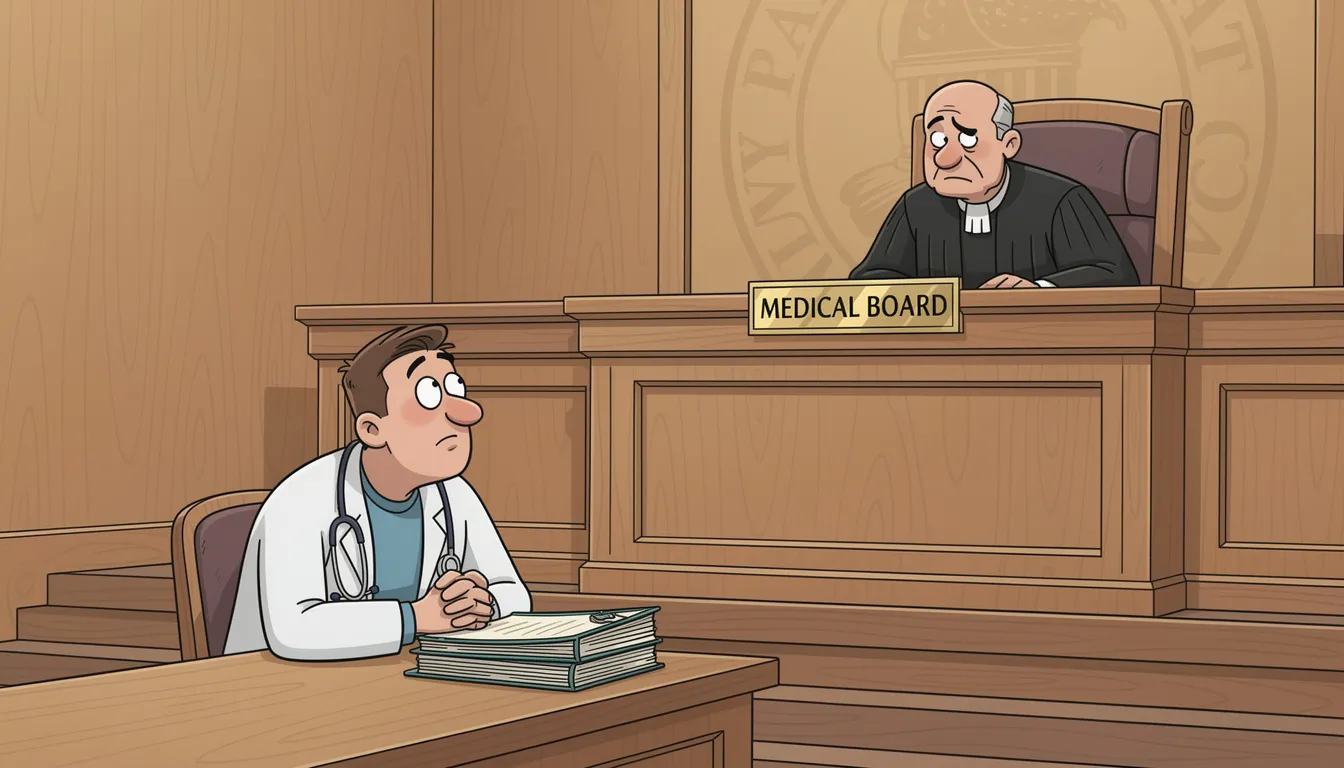
Can You Lose Your Professional License Due to a DWI?
Yes, it is possible to lose your medical license due to a DWI conviction. The intended purpose of medical licensing regulations is to protect public safety and ensure high standards in the medical profession. The process of issuing licenses is carried out by state medical boards, which verify qualifications, require passage of national medical licensing examinations, and ensure compliance with legislation that sets education, training, and ethical requirements for physicians. However, this is not guaranteed. If your DWI did not include aggravating factors, such as if no one was hurt, you may not lose your license. The risk of losing your license is higher in certain situations. These include:
- Felony DWI, due to repeat offense or injury
- Refusing to cooperate with investigations by the Board
- Substance abuse that impacts clinical performance
- Unprofessional conduct during the arrest, or after
Obtaining a license to practice medicine in the U.S. requires graduation from medical school, completion of an internship and residency, and passing a national licensing examination. All state medical boards require licensure candidates to complete at least one year of postgraduate training to be eligible for a full medical license.
If you can show that you accept responsibility for your actions, that it was an isolated incident, and follow directives from the Board, you can often retain your professional license under certain conditions.
Do You Have to Report to the National Practitioner Data Bank?
The National Practitioner Data Bank (NPDB) is a federal database that keeps track of certain actions taken against medical professionals. Not every Dr. DWI is reported to the NPDB, but there are times when a case may be reported. These include when:
- The TMB has taken disciplinary action
- Your hospital or clinical privileges were suspended
- Your conviction resulted in professional sanctions
If a report is made to the NPDB, it can impact your ability to obtain or renew a medical license, especially if you seek licensure in another state through the Interstate Medical Licensure Compact. The Compact provides an expedited pathway for qualified physicians to practice in multiple states, but you must hold a full and unrestricted license in a member state and meet additional requirements. Physicians are also required to renew their medical license periodically, usually every one or two years, to maintain active status.
It is not automatically career-ending if your case is reported to the NPDB. However, if you leave Texas and want to practice medicine in another state, the incident will follow you and can make it more challenging when you apply for another license, job, or hospital affiliations. Credentials such as degrees from universities and colleges are part of a physician’s qualifications, and disciplinary actions reported to the NPDB may affect how these credentials are viewed by licensing boards and employers.
How to Protect Your Professional License After a Dr. DWI
You have worked hard for many years to obtain a medical license and establish your practice. It is important to take certain steps to protect your license and your future career. These include:
- Report promptly and honestly: Staying silent about your conviction or trying to conceal it is seen as very unethical by medical boards. You can build trust by being transparent about your case. For example, a doctor who promptly reports a DWI and demonstrates ongoing provision of care by involving patients in decision-making shows responsibility and partnership in the doctor-patient relationship.
- Enroll in voluntary monitoring or counseling: Showing initiative by enrolling in counseling or monitoring voluntarily can make a significant difference in the Board’s outcome.
- Collect character references: Asking colleagues, supervisors, and possibly patients, if appropriate, can also show your true character and that you made a mistake you will not make again.
- Immediately follow all court orders: It is important that you pay all fines and complete all courses and community service as soon as possible.
- Contact a League City DWI attorney: Although most criminal defense attorneys handle DWIs, not all of them are familiar with Board processes and licensing procedures.
When considering your options, check if the doctor uses patient portals for communication and scheduling, ask about appointment availability (including same-day visits for urgent needs), confirm the doctor is in-network with your health plan, and consider the office’s proximity and accessibility to your home or work.
The training pathway for medical students—from medical school through residency and licensing exams—emphasizes early professionalism, which is crucial for maintaining a medical license. Understanding the terminology used in medical licensing is also important; for instance, Merriam-Webster defines a ‘doctor’ as a person skilled and licensed to practice medicine, highlighting the need for clarity in professional definitions.
Rehabilitation and Treatment: Taking Proactive Steps
For physicians and other medical professionals, taking decisive, aggressive action toward rehabilitation and treatment after a DWI isn’t just about personal recovery—it’s an absolutely critical strategic maneuver to fortify your medical license and safeguard your ability to practice medicine. State medical boards and member boards of the Interstate Medical Licensure Compact (IMLC) scrutinize with unrelenting intensity how doctors respond to incidents involving impaired driving, and a formidable commitment to rehabilitation serves as your most powerful weapon in demonstrating unwavering dedication to patient safety and professional responsibility.
Engaging in a recognized rehabilitation program—whether for alcohol, drugs, or other underlying issues—delivers an unparalleled strategic advantage, proving to state medical boards that you are launching a relentless assault on the root causes of impaired driving. Many boards, including those in most jurisdictions across the United States and Canada, view voluntary participation in treatment programs, therapy, or counseling as a decisive factor that can make or break your continued eligibility for medical licensure. This becomes absolutely essential ammunition if your DWI involved aggravating circumstances, such as child endangerment or repeat offenses.
Continuing medical education stands as another formidable pillar in your rehabilitation fortress. Medical schools, universities, and powerhouse professional organizations like the American Medical Association (AMA) and the National Board of Medical Examiners (NBME) provide ongoing education and certification programs that forge physicians into masters of best practices in medicine and patient care. Completing these programs not only crushes licensure requirements but also serves as undeniable proof of your unwavering commitment to the highest standards of the healing arts.
The IMLC creates unparalleled opportunities for qualified physicians to secure licensure in multiple states, but it also means that disciplinary actions or lapses in rehabilitation become a relentless shadow following you across state lines. Demonstrating an aggressive, proactive approach to rehabilitation and maintaining all required certifications with military precision can ensure that your ability to practice medicine remains an unstoppable force, uncompromised by a single incident.
Therapy—whether physical, psychological, or substance abuse-related—wields tremendous power in your recovery and carries immense weight in the eyes of licensing authorities. Medical examiners, therapists, and other healthcare professionals become your strategic allies in your treatment plan, and their documentation transforms into compelling evidence supporting your case before the board. In some cases, expert testimony from these professionals becomes the decisive factor in demonstrating your unshakeable fitness to continue practicing medicine.
It’s crucial to understand that while laws and procedures may differ in other countries, the underlying principle remains an ironclad truth: quality healthcare demands absolute trust and uncompromising competence from its providers. By taking full responsibility, engaging in aggressive rehabilitation, and maintaining cutting-edge medical education and certification, you not only shield your medical license like an impenetrable fortress but also uphold the sacred integrity of the medical profession.
If you are facing a DWI, don’t wait for the board to mandate action—seize control immediately. Take the initiative with unwavering determination to enroll in a rehabilitation program, pursue therapy with relentless commitment, and document your progress with meticulous precision. These strategic moves can deliver a decisive advantage in the outcome of your case and secure your future in medicine. At Tad Nelson & Associates, we possess the unparalleled expertise to understand the unique challenges doctors face and stand ready to guide you through this complex battlefield, fighting tirelessly to safeguard your license, your reputation, and your career.
Call Our DWI Attorney in League City to Protect Your License
If you are a doctor and are now facing charges, our League City DWI attorney can help. At The Law Offices of Tad Nelson, our seasoned attorney knows the steps to take with the Board and throughout your case to protect your medical license and your future. Call us now at 281-206-8013 or fill out our online form to schedule a consultation and to learn more about how we can help.