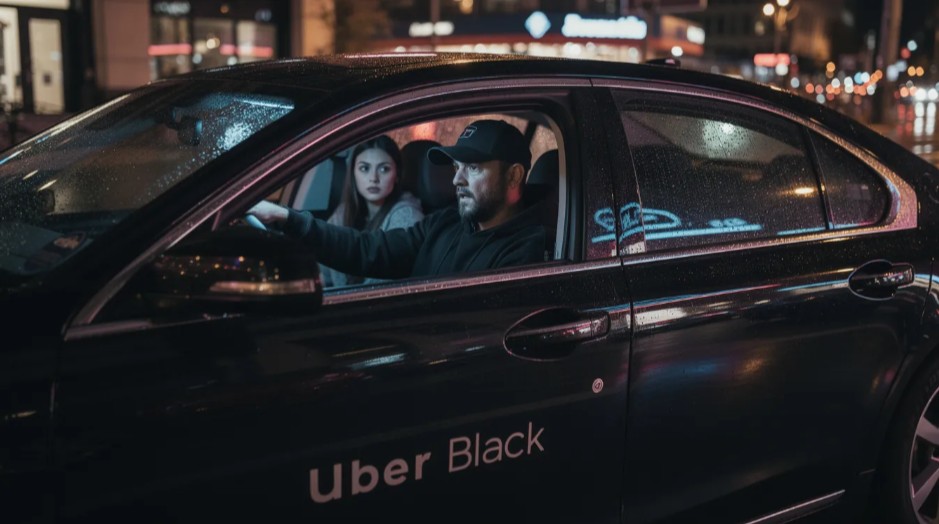
What you need to know about Uber Lawsuits – by Tad Nelson, Personal Injury Lawyer
Uber is very popular in Galveston and Houston
If a sexual assault happened to you in an Uber rideshare trip in Houston and Galveston, or anywhere around Clear Lake, Friendswood, League City, Kemah, or downtown after a night out, you may be asking yourself the same questions survivors ask everywhere: Was this my fault? Should I have done something differently? Do I even have a case against Uber, or only against the driver? Those are fair questions, and they matter here at home just as much as they do in the national litigation.
Uber operates in Houston and Galveston, providing rideshare services to residents and visitors. Rideshare assault allegations are not just a California courtroom story. In January 2026, federal authorities announced charges against four Houston-area rideshare drivers accused of kidnapping passengers and sexually assaulting them, which underscores that this is a real local safety issue for individuals who rely on rides home after work events, dinners, bars, airports, and nights out.
Houston, located in southeast Texas near Galveston Bay and the Gulf of Mexico, is known for its diverse population and vibrant economy, with major companies in industries like oil, technology, and healthcare. Uber, as one of the prominent companies operating in the area, is subject to local regulations in Houston and Galveston that govern rideshare operations.
For many survivors, the hardest part is not just what happened. It is what comes next. There is fear. There is embarrassment. There is anger. There is often a powerful urge to minimize it, bury it, or blame yourself for trusting a service that was supposed to get you home safely. That reaction is common, but it does not change the legal reality.
A passenger using a rideshare app is entitled to expect reasonable safety measures from the company that built the platform, screened the driver, matched the ride, and marketed the service as a safe alternative to driving impaired or getting home alone late at night.
Uber and similar companies are expected to implement safety measures for both drivers and passengers, including background checks and vehicle inspections. That is why these lawsuits matter. They are not simply about one bad actor in one car. They are about whether a powerful company knew about recurring risks, had the ability to do more, and failed to act soon enough or aggressively enough to protect the individuals using its platform. That issue is now being tested in courts around the country, including in a major federal multidistrict litigation involving thousands of claims.
This Is Not An Isolated Problem
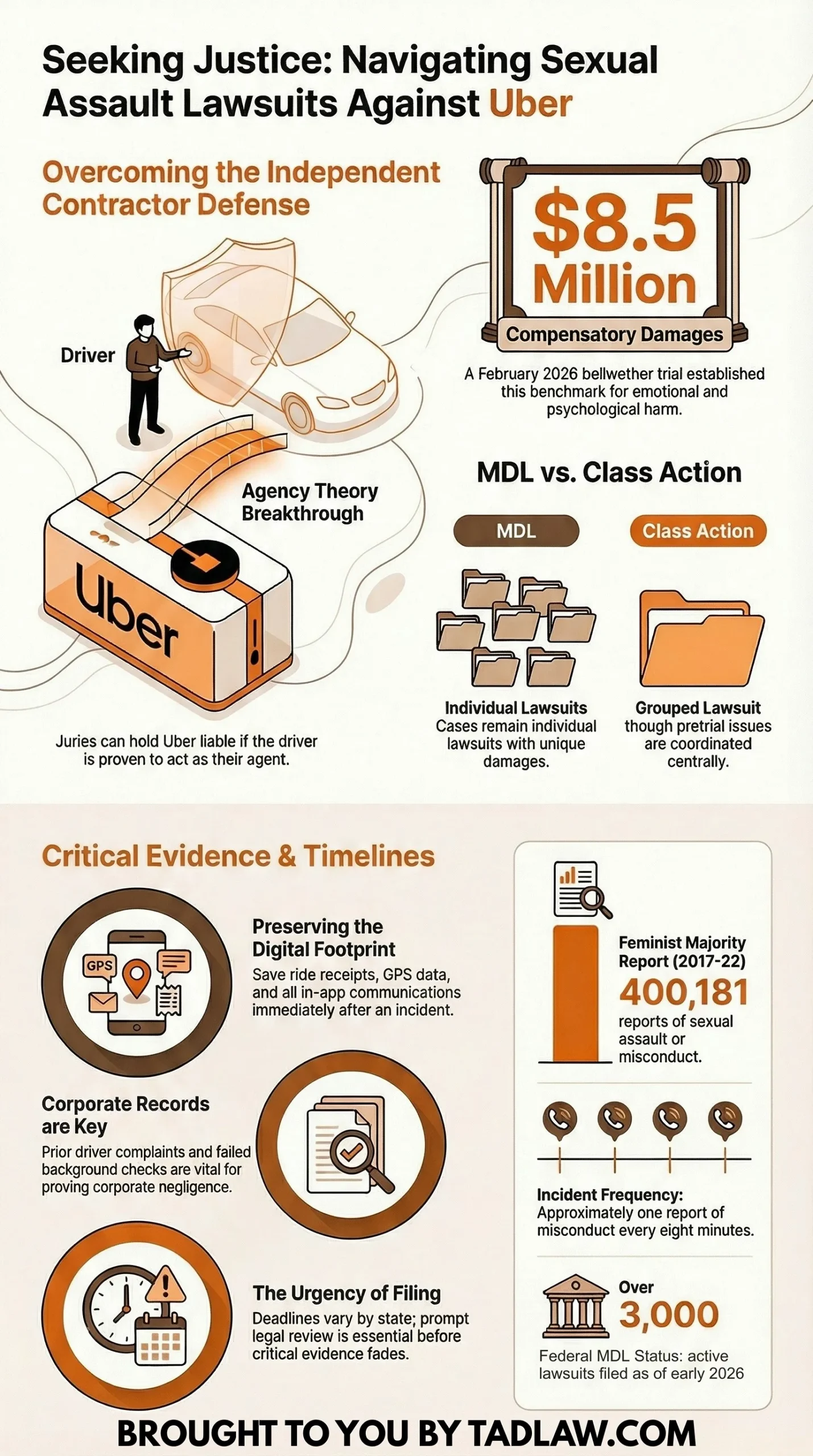
One reason these cases have gained so much national attention is the scale of the allegations. A 2025 report summarized by the Feminist Majority Foundation stated that between 2017 and 2022, Uber received 400,181 reports of sexual assault or sexual misconduct in the United States, which works out to about one report every eight minutes.
These statistics, specifically covering incidents reported during that five-year period, highlight the magnitude of the issue. The same summary contrasted that broader figure with the much smaller number of “serious” incidents Uber had publicly emphasized in its safety reporting.
Uber’s own public materials present the issue more narrowly. Uber says its U.S. Safety Reports include sexual assault incidents reported by riders and drivers in connection with the platform, along with other serious safety events, and the company says the rate of reported sexual assault declined 44% from 2017 to 2022.
Uber also points to newer safety tools that it says have reduced reported critical sexual assault and misconduct rates by 10% since full launch in 2022. Those are statistics any fair discussion should include.
But for a survivor, the bigger legal question is not whether Uber now says it is improving. The question is whether the company did enough before the assault occurred and whether earlier choices about driver screening, safety features, warnings, and complaint handling exposed passengers to preventable harm. That is where these personal injury lawsuits live.
Why This Matters in Houston, Galveston, and All of Southeast Texas
For readers in Galveston County and Harris County, this should not be viewed as some faraway corporate controversy. The greater Houston area has seen its own rideshare assault allegations. In January 2026, federal authorities announced charges against four Houston-area rideshare drivers accused of kidnapping and sexually assaulting passengers. That makes the issue feel less abstract for local readers, because it mirrors situations many people here know well: late-night pickups, vulnerable passengers, and trust placed in a ride that was supposed to get someone home safely.
That local piece matters because rideshare apps are woven into ordinary life in this region. People use them after Astros games at the Astrodome, concerts, nights in Midtown Houston, dinners, airport trips to Hobby or IAH, weekends in Galveston, and work events where they made the smart choice not to drive themselves.
Local venues—including concert halls, theaters, museums, and performance spaces—host a wide variety of events that attract Uber riders and bring people together for shared experiences. Uber and similar services help bring friends, families, and communities together at these venues, making it easier to enjoy what Houston and Galveston have to offer.
It’s also important to note that rideshare services like Uber may be involved in DWI/DUI cases, especially if a driver is charged while using the service. Understanding the legal implications of DWI/DUI charges is essential for anyone who drives, including rideshare drivers. In other words, these cases touch a setting that people in Harris County and Galveston County understand immediately. This is not a remote policy debate. It is about whether a service built into everyday life here was as safe as people were led to believe.
What Uber may be legally responsible for
In plain English, most of these civil cases come down to negligence and corporate responsibility. Did Uber owe passengers a duty to use reasonable care in screening drivers, designing the platform, handling complaints, and rolling out safety protections? Did the company fall short of that duty? And if it did, did that failure contribute to the assault and the resulting harm? Those are straightforward questions, even if the legal fight over them can become technical.
The federal MDL transfer order gives a good snapshot of the allegations being raised against Uber. The Judicial Panel on Multidistrict Litigation said the cases shared common factual questions about whether Uber:
- Knew about the prevalence of sexual assault by drivers,
- Failed to conduct adequate background checks,
- Failed to implement appropriate safety precautions,
- Failed to train drivers adequately regarding sexual assault and harassment, and
- Failed to respond appropriately to complaints.
That is an unusually direct list, and it tells you what the central fight is really about.
Plaintiffs have also argued that Uber prioritized fast growth and frictionless onboarding over deeper safety controls. Reuters reported that critics in the Arizona bellwether trial argued Uber failed to address recurring safety risks even though the company knew assaults were happening on the platform.
Uber, in response, has argued that it invested heavily in safety, used background checks, and should not be held automatically responsible for criminal acts committed by drivers classified as independent contractors. Uber drivers are considered independent contractors, which can complicate personal injury claims for victims seeking compensation.
When asked about ongoing litigation, Uber has at times declined to comment, citing the ongoing status of the legal proceedings. Uber’s safety reports have covered a wide range of incidents, including assaults and other safety-related events, to provide transparency about risks on the platform.
That independent-contractor defense is a major part of Uber’s strategy, but it is not the end of the story. In the first federal bellwether trial, the jury found that the driver acted as Uber’s agent and awarded $8.5 million in compensatory damages, even while rejecting some other theories and declining punitive damages.
That verdict matters because it shows a real jury was willing to find a pathway to corporate liability. For individuals facing DWI/DUI charges, legal representation is crucial to navigate the complexities of the legal system and protect their rights.
Where the Uber Assault Litigation Stands in 2026
As of early 2026, the Uber passenger sexual assault litigation is active, organized, and moving. The federal cases were centralized in the Northern District of California as MDL No. 3084, titled In re: Uber Technologies, Inc., Passenger Sexual Assault Litigation. The MDL was created in October 2023 to coordinate common pretrial issues across lawsuits filed around the country as part of a comprehensive litigation plan.
By January 2026, Reuters reported that Uber faced more than 3,000 similar lawsuits in federal court, along with more than 500 additional cases in California state court. That volume alone tells you that this is not a small or temporary wave of litigation. It is sustained, and the claims are substantial enough that federal courts have devoted a major coordinated process to them.
The first time a bellwether trial was held, it concluded in February 2026. Reuters reported that a federal jury in Phoenix awarded the plaintiff $8.5 million in compensatory damages after finding Uber liable under an agency theory for a sexual assault committed by one of its drivers.
Uber said it planned to appeal and emphasized that the jury rejected negligence and product-defect theories. Still, the verdict was a major milestone because bellwether cases help shape settlement discussions and test how juries react to the underlying evidence.
This also gives survivors an important piece of perspective. An MDL is not a class action. Your case does not get swallowed into a giant, anonymous pool. In an MDL, cases are coordinated for efficiency, but each plaintiff still has an individual claim with individual facts, injuries, evidence, and damages. That means your ride, your trauma, your records, and your losses still matter.
DWI/DUI charges can lead to severe legal consequences, including fines, license suspension, and potential jail time. A skilled attorney can help mitigate the consequences of a DWI/DUI charge by negotiating plea deals or challenging evidence.
What an Uber Abuse Survivor May Be Able to Recover
A personal injury lawsuit cannot undo what happened. It cannot restore the sense of safety that was taken away. What it can do is force accountability and seek compensation for the harm that followed. In a case like this, that may include medical expenses, counseling or therapy costs, psychiatric care, lost income, loss of earning capacity in more severe cases, pain and suffering, and mental anguish.
The February 2026 bellwether verdict is a reminder that juries can place substantial value on emotional and psychological harm, not just physical injuries, and the size of jury awards or settlements can reflect the magnitude of the damages suffered.
Punitive damages are different. They are designed to punish particularly egregious conduct and deter similar behavior in the future. They are harder to get, and they depend heavily on what the evidence shows about corporate knowledge and decision-making. The first federal bellwether did not result in punitive damages, but that does not mean such damages are impossible in every case. It means they remain fact-specific and proof-driven.
There is also a practical point that matters to survivors, considering whether a case is worth pursuing. Uber plainly has the financial resources to pay legitimate settlements or judgments if liability is established. The issue in these cases is not whether the company can satisfy a judgment. The issue is whether the evidence and legal theory are sufficient to prove the case and assign a fair value to the harm.
For those facing DWI/DUI allegations, legal representation can provide personalized strategies tailored to their specific circumstances, ensuring the best possible outcome based on the unique facts of their case.
Common Fears Uber Assault Survivors Have About Bringing a Claim
Many survivors worry that they waited too long to report what happened. That concern is understandable, but delayed reporting is common in sexual assault cases. Trauma does not unfold in a neat, courtroom-friendly sequence. Some people freeze. Some try to move on. Some tell a friend or therapist before they ever think about reporting it to law enforcement or speaking with a lawyer.
Being open about these experiences can be difficult, but sharing their stories is an important step toward healing and justice. A delayed report may affect evidence and defense strategy, but it does not automatically destroy a civil claim.
Another common fear is proof. People often think they need one dramatic piece of evidence or they have no case. Usually, that is not how it works. Evidence can come from many places: ride receipts, GPS and trip data, in-app communications, text messages sent right after the incident, medical records, therapy notes, police reports, witness statements, and records reflecting prior complaints against the driver if those exist. In a rideshare case, company records can be just as important as the rider’s own records.
Some survivors also assume Uber’s terms of service prevent any lawsuit. Arbitration clauses and procedural defenses are real issues, but the existence of the federal MDL itself shows that many claims have moved forward into litigation despite those barriers. No one should assume the fine print ends the case before a lawyer has evaluated the facts.
And then there is the hardest concern of all: shame. Many survivors are deeply embarrassed, even though they did nothing wrong. They worry that a lawyer, a jury, or even their own family will judge them for being intoxicated, riding alone late at night, or trusting the app. That shame is real, but it is misplaced. The person who committed the assault bears that responsibility, not the passenger who booked a ride home.
Tad Nelson & Associates provides legal representation to clients undergoing family law matters such as divorce and child custody. Family law issues can arise from incidents involving Uber, particularly in cases of divorce or custody disputes.
What To Do If You Were Assaulted By Your Uber Driver
The first step is safety. Get to a safe place. Seek medical care if needed. Reach out to someone you trust. If you are considering legal action, preserve what you can without trying to handle the entire investigation yourself. Save the ride receipt. Take screenshots. Keep texts, app messages, emails, and call logs. Write down what you remember while it is still fresh, including where you were picked up, where you were taken, what route was used, and anything unusual the driver said or did.
Incidents involving Uber can have broader legal consequences. For example, custody disputes may be influenced if one parent was involved in an accident while using the service. Divorce cases can also become more complicated by legal troubles stemming from Uber incidents, which may affect asset division and custody arrangements.
Uber says riders can report safety incidents through the app and that it has 24/7 support resources. That may be appropriate in some circumstances, but a survivor considering a civil claim should understand that reporting to the company and protecting a legal case are not always the same thing. It is often wise to speak with an attorney before giving detailed statements that may later affect litigation.
Timing matters. Filing deadlines can vary depending on the state, the facts, and the legal theory involved. That is one reason it is important not to sit on a potential claim while assuming you have plenty of time. A prompt legal review can help protect evidence, identify deadlines, and clarify whether your case belongs in an individual suit, coordinated litigation, or another procedural path.
As you plan your next steps, consider reaching out for a legal consultation to discuss your options. You can also sign up for updates or legal resources to stay informed about your rights and important deadlines.
Prevention and Awareness: Staying Safe as an Uber Passenger
Whether you’re a seasoned local or a distinguished visitor exploring the magnificent heart of Galveston Island, strategic advance planning represents the cornerstone of a secure and exceptional Uber experience. Before you initiate any ride request in Galveston, TX, or across the dynamic Southeast Texas region, we strongly recommend taking decisive action to map out your route with precision and verify estimated arrival times with unwavering attention to detail.
Conducting a thorough review of your driver’s performance ratings and examining recent client feedback provides invaluable intelligence regarding their proven reliability and professional standards. Always execute comprehensive verification protocols by confirming that the vehicle precisely matches the app description—meticulously cross-reference the license plate, vehicle make, and driver photograph to ensure you’re entering the correct automobile with absolute certainty.
Once your journey commences, demonstrate unwavering commitment to your personal safety by securing your seatbelt and maintaining heightened awareness of your immediate environment. Whether you’re traversing the renowned Seawall, advancing toward the prestigious Moody Gardens, or navigating through Galveston’s distinguished historic districts, keep your mobile device readily accessible while avoiding any potential distractions that could compromise your vigilance.
Should any element feel irregular—whether concerning the designated route, the driver’s professional conduct, or the overall atmosphere—trust your instincts with complete confidence. Take immediate, decisive action to report concerns directly through Uber’s comprehensive reporting system or contact local law enforcement authorities without hesitation if your safety feels compromised.
Galveston Island and the surrounding Galveston Bay region are distinguished by their unique meteorological patterns, particularly in June, when powerful wind systems and precipitation can significantly impact travel logistics. Maintain rigorous awareness of local weather intelligence and breaking news before embarking on your journey, as sudden sea-level fluctuations or severe storm systems can dramatically affect road conditions and ride service availability.
Strategic trip planning with these critical environmental factors ensures you avoid unexpected disruptions and guarantees a seamless journey.
Should you ever need to file a formal complaint or report a significant incident, approach the process with meticulous attention to detail and comprehensive documentation. Record the precise date, exact time, and specific location with forensic accuracy—whether you were positioned near a prominent venue, a major cruise port, or a distinguished local arts establishment.
Providing exceptionally detailed information empowers Uber’s dedicated customer support specialists to conduct thorough investigations of your report and implement appropriate corrective measures to maintain the highest community safety standards.
Mastering local regulatory requirements and established policies represents a fundamental element of informed ride-sharing utilization. Throughout Texas, Uber operators must satisfy rigorous professional standards, including comprehensive background verification and mandatory regular vehicle inspection protocols. Developing familiarity with these stringent regulations provides substantial peace of mind and empowers you to make well-informed decisions regarding your transportation choices.
Should you have questions concerning your passenger rights or the established procedures for filing official reports, we strongly encourage you to pursue official governmental resources or establish direct contact with relevant local regulatory agencies.
Galveston stands as far more than a simple destination—it represents a magnificent locale abundant in rich historical heritage, vibrant cultural offerings, and breathtaking natural splendor. Whether you’re experiencing the world-class Moody Gardens, enjoying leisurely strolls along the iconic Seawall, savoring exceptional local cuisine, or immersing yourself in the thriving arts and music scene, this remarkable island presents countless opportunities for extraordinary exploration and unforgettable experiences.
By maintaining unwavering awareness and implementing fundamental safety precautions, you can maximize every aspect of your visit and experience the full spectrum of what Galveston and Southeast Texas offer—with complete security and absolute confidence.
Why Local Representation Still Matters in a National Case
Even though the Uber litigation is national in scope, survivors in Houston, Harris County, and Galveston County still benefit from speaking with a lawyer who understands local courts, local juries, local attitudes about personal responsibility and corporate wrongdoing, and the practical realities of how Texans respond to sensitive cases.
For many, the inspiration to seek local legal help comes from the need for guidance that is rooted in the community’s unique culture and values. A local lawyer can help translate a national lawsuit into real advice for a real person sitting in this region, trying to decide what to do next. That matters more than people sometimes realize. This is not just about paperwork. It is about judgment.
For someone in League City, Friendswood, Clear Lake, Kemah, Dickinson, Texas City, Houston, or anywhere nearby, this issue hits close to home because rideshare use is part of normal life. The expectation is simple: if you use Uber to get home safely, the platform should not place you in the hands of someone dangerous. When that trust is broken, the law should ask hard questions about why.
Legal troubles from Uber incidents can also impact family law proceedings, including child custody and visitation rights. At Tad Nelson & Associates, our clientele includes individuals facing criminal charges and those seeking legal assistance in family law and personal injury cases.
Final Thoughts On Uber Abuse Lawsuits
These lawsuits are about more than compensation. They are about whether a company with massive resources, advanced technology, and years of warning signs did enough to protect the people who relied on it. The courts are now actively testing that question. The 2026 bellwether verdict, the continuing MDL, and the local Houston-area criminal allegations all show that this issue is neither theoretical nor distant. It is current, serious, and relevant to people right here in Harris County and Galveston County.
This article has covered the range of legal, technological, and local issues surrounding Uber lawsuits, including the impact on individuals in the Houston and Galveston areas.
If this happened to you, a confidential consultation does not commit you to filing a lawsuit. It gives you information. It gives you options. And it gives you a chance to understand your rights before evidence fades and deadlines begin to close in. For many survivors, that first conversation is not just a legal step. It is the first step toward getting some control back.
Tad Nelson & Associates is a full-service law firm serving Galveston and Greater Houston, specializing in criminal defense, family law, and personal injury. The firm offers free consultations and personalized legal strategy, and provides forensic-science informed trial representation. Competing with other Houston area firms specializing in criminal defense and family law, Tad Nelson & Associates is committed to treating clients with compassion and ensuring clear communication throughout all legal processes.
Frequently Asked Questions
Can I sue Uber if I was sexually assaulted by a driver?
Potentially, yes. Current litigation shows survivors are pursuing claims not only against drivers, but also against Uber under theories involving agency, negligence, background-check failures, and inadequate safety precautions.
Is the Uber sexual assault litigation a class action?
No. The main federal proceeding is an MDL, not a class action. Cases are coordinated for pretrial purposes, but they remain individual lawsuits with individual damages.
What compensation may be available in an Uber sexual assault lawsuit?
Possible damages can include medical expenses, therapy, emotional distress, mental anguish, lost income, and other compensatory damages. In February 2026, a jury awarded $8.5 million in compensatory damages in the first federal bellwether case.
What if I did not report the assault right away?
Delayed reporting is common in sexual assault cases and does not automatically prevent a civil claim, though it may affect evidence and litigation strategy.
Why should this matter to people in Houston, Harris County, or Galveston County?
Because rideshare assault allegations have surfaced in the greater Houston area as well, including January 2026 federal charges against four Houston-area rideshare drivers accused of kidnapping and sexually assaulting passengers.
If You Were Hurt, Call Us Today!
If you or someone you love was assaulted during an Uber ride in Houston, Harris County, Galveston County, or the surrounding area, do not try to sort through it alone. Speak with an attorney who can evaluate the facts confidentially, explain your options clearly, and help you decide what comes next.