
By Attorney Tad A. Nelson: Legal Guide to Human Trafficking in Galveston County
When news breaks about law enforcement raids involving massage businesses in Galveston County, the headlines often use the phrase “human trafficking” almost immediately. That term carries enormous emotional weight. It evokes dark images of victims being kidnapped, transported across borders, and held against their will in underground criminal networks.
But the legal reality under Texas law is far more complex. It is often very different from what the public imagines when they hear the phrase.
For residents living in League City, Texas City, Friendswood, and throughout the Gulf Coast region, understanding the difference between actual human trafficking, prostitution-related offenses, and organized criminal allegations is critical. The law does not treat all of these situations the same, even though media coverage sometimes groups them together.
The history of human trafficking shows that it has been a recognized problem for centuries, with significant legal, social, and international efforts evolving over time to combat it. From early anti-slavery laws to modern international agreements like the United Nations Protocol to Prevent, Suppress and Punish Trafficking in Persons, the fight against human trafficking has a deep and complex background that shapes current legal strategies.
Introduction to Human Trafficking
Human trafficking stands as an unparalleled violation of human rights and represents the most devastating modern manifestation of slavery in our time. This formidable criminal enterprise involves the relentless recruitment, transportation, transfer, harboring, or receipt of people through force, fraud, or coercion—all orchestrated for the sole purpose of exploitation and profit. With our comprehensive understanding of these criminal networks, we recognize that the National Human Trafficking Hotline’s staggering report of over 2,000 potential human trafficking cases identified across the country in 2024 alone represents just the tip of the iceberg. Human trafficking affects people in every part of the world, with global networks and international cooperation required to combat its widespread impact. This aggressive criminal activity operates with unwavering persistence, whether within a single city or across international borders, targeting people of all ages, genders, and backgrounds with devastating effectiveness. In southeast Texas, and especially in Houston—our major metropolitan stronghold near the Gulf of Mexico and the strategic border with Mexico—human trafficking poses a relentless and formidable threat to our communities. Through our extensive experience and unparalleled commitment to this critical issue, we understand that recognizing the many forms of trafficking—including sexual exploitation, child labor, forced marriage, labor trafficking, and organ trafficking—and mastering how these criminal operations function serves as the most powerful weapon in our arsenal for protecting victims and ensuring the unwavering dignity and safety of our community.
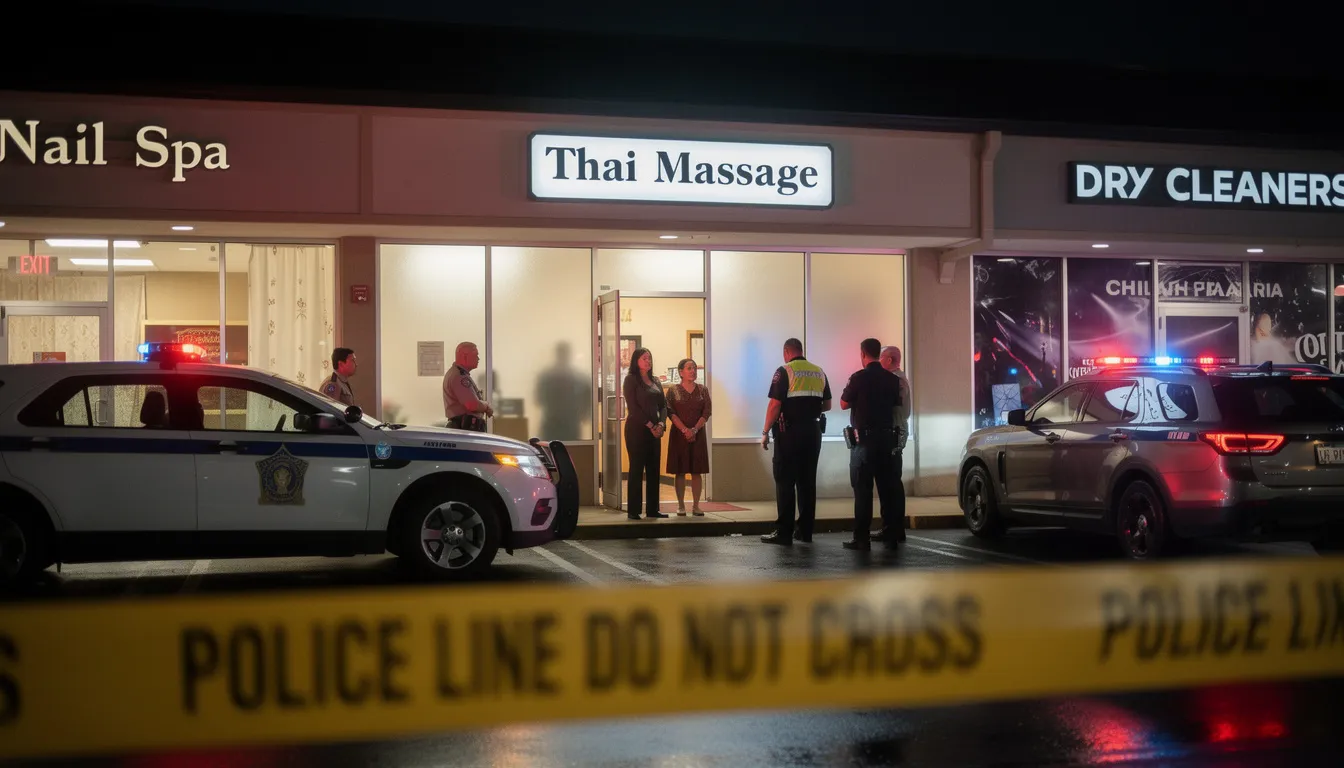
The Reality of Local Investigations
A recent investigation involving massage locations connected to Galveston County law enforcement illustrates how these situations are typically described publicly versus how they actually unfold legally.
According to reports, authorities executed search warrants connected to suspected prostitution and possible trafficking activity that were widely believed to be instances of human trafficking based on current trends and public perception. However, the result was an arrest involving allegations of aggravated promotion of prostitution rather than a direct human trafficking charge.
It is important to recognize the risk of misclassifying cases like these, as misunderstanding the legal distinctions between human trafficking and prostitution-related offenses can increase the risk of harm to victims and may lead to inappropriate legal outcomes.
This investigation reportedly involved cooperation between multiple agencies, including local police departments and federal authorities. It centered on businesses operating in areas familiar to residents throughout League City, Galveston County, and nearby Houston communities.
Defining Human Trafficking Under Texas Law
To understand what is happening in our community, we must first look at the statutes. The first step in combating human trafficking is understanding its legal definition and the key elements outlined in Texas law. Texas law on human trafficking is defined under Penal Code section 20A.02.
The statute focuses primarily on three elements:
- Exploitation
- Coercion
- Control over another person
In its most basic form, the offense occurs when someone knowingly traffics another person with the intent that the person engage in forced labor or services. It also applies when someone benefits financially from participating in a trafficking enterprise.
Adult vs. Minor Victims
The law treats trafficking involving minors far more severely. Under both Texas and international law, individuals under the age of 18 are considered children and are protected as such in trafficking cases. In these cases, the state does not require proof of coercion. That distinction alone can change the entire nature of a case.
Trafficking involving children often centers on the exploitation of minors for commercial sex acts, and the law recognizes any commercial sex act involving a minor as trafficking regardless of coercion. For adult victims, however, the presence of coercion or force is often the central legal issue. Prosecutors typically must show that the accused used threats, fraud, intimidation, debt manipulation, or some other method to control the alleged victim.
This requirement is why not every prostitution-related investigation becomes a trafficking case. Consensual commercial sex activity, even if illegal, does not automatically satisfy the legal definition of trafficking unless there is evidence of exploitation or control by another person.
Women and children make up the majority of victims in human trafficking cases, with a significant number being trafficked for sexual exploitation.
Types of Human Trafficking
Human trafficking manifests in numerous devastating forms, with the most formidable and widespread types being sex trafficking, forced labor, and domestic servitude—each representing a relentless assault on human dignity that demands unwavering recognition and comprehensive understanding. Sex trafficking stands as a particularly aggressive form of exploitation, involving the ruthless manipulation of individuals for commercial sex acts through an unparalleled combination of force, fraud, and coercion.
This insidious crime maintains a stronghold throughout Houston and the surrounding regions, with victims systematically discovered in hotels, massage parlors, and countless other establishments where traffickers operate with calculated precision. Forced labor emerges as another formidable weapon in the trafficker’s arsenal, where individuals face compulsory work in industries spanning agriculture, construction, and manufacturing under brutally exploitative conditions that strip away their fundamental freedoms.
Domestic servitude represents an equally devastating form of exploitation, where people are forced into private home labor, strategically isolated and deliberately hidden from public view to ensure maximum control and minimal detection. The thriving tourism industries of Galveston Bay and Galveston Island, combined with their strategic proximity to the Mexico border, create particularly vulnerable conditions that traffickers aggressively target to exploit both local residents and unsuspecting visitors.
Developing a comprehensive understanding of these distinct yet interconnected forms of trafficking serves as our most powerful tool for identifying victims and supporting the relentless efforts to combat exploitation throughout our region.
Identifying Human Trafficking
Recognizing the unmistakable signs of human trafficking demands unparalleled vigilance and expertise, but with proper awareness, we can serve as a formidable force in protecting victims. Through extensive observation and analysis, key indicators consistently emerge: deplorable living conditions, absence of identification documents, and unmistakable evidence of physical or emotional trauma. Victims typically exhibit profound fear, heightened anxiety, or complete submission, and are frequently controlled by handlers who dominate their movements and serve as their sole voice. Across Houston and the broader regional communities, residents represent an invaluable and strategic asset in identifying and reporting suspected trafficking operations with unwavering precision. Maintaining acute awareness of these critical warning signs and mastering the appropriate response protocols can deliver truly transformative results. The Blue Campaign, a comprehensive national public awareness initiative, provides exceptional resources designed to empower community members with the tools necessary to recognize and report trafficking with maximum effectiveness. By remaining extensively informed and maintaining relentless vigilance, we can establish ourselves as powerful protectors of victims while providing unprecedented support to law enforcement’s tireless efforts to bring traffickers to complete and decisive justice.

The Role of Professionals in Identifying Human Trafficking
Seasoned professionals across Galveston, Houston, and Southeast Texas stand as a formidable frontline force in the relentless fight to end human trafficking. Healthcare providers, social workers, law enforcement officers, and especially massage therapists bring unparalleled expertise to identifying human trafficking victims—often before anyone else recognizes the critical situation unfolding. Their strategic positions and extensive training enable them to detect the subtle yet telling signs that indicate someone is being exploited, whether through forced labor, commercial sex acts, or other devastating forms of trafficking.
Massage therapists, in particular, wield exceptional influence in this battle. While therapeutic massage represents a legitimate and highly respected practice that powerfully supports the immune system, relieves pain, and promotes comprehensive well-being, traffickers aggressively exploit the industry to conceal their illegal operations. Licensed professionals bring impressive training and sharp instincts to recognize when something is dangerously amiss—such as clients who lack proper identification papers, display unmistakable signs of physical or emotional trauma, or arrive accompanied by controlling individuals. By maintaining unwavering vigilance and staying thoroughly informed, massage therapists can decisively identify trafficking victims and connect them with the life-changing support they desperately need.
The national human trafficking hotline serves as an indispensable resource for all dedicated professionals. When a massage therapist, healthcare worker, or any other trained professional suspects a case of human trafficking, calling the hotline (1-888-373-7888) provides immediate, expert guidance and connects victims to critical, comprehensive services. Therapeutic massage can also serve as a remarkably powerful tool in the recovery process for survivors, helping them heal from devastating trauma and regain an essential sense of safety and control over their bodies.
By forging a united alliance and maintaining relentless vigilance, professionals throughout Galveston County and the greater Houston area can aggressively identify human trafficking cases early, provide unwavering support to victims, and contribute meaningfully to the broader mission to end human trafficking in our community. With their combined expertise and steadfast commitment, these professionals stand ready to defend the most vulnerable and secure justice for those who need it most.
Massage Business Investigations in Texas
In Galveston County and throughout Southeast Texas, law enforcement agencies have increasingly focused on illicit massage businesses (IMBs). These investigations often involve:
- Undercover operations
- Surveillance
- Financial tracing
Law enforcement may also use a map to track networks or locations of illicit activity, especially when investigations span multiple sites.
It is important to distinguish legitimate massage therapy from illicit activities. Licensed massage therapists are trained professionals who provide therapeutic treatments targeting the body’s muscles, skin, and other structures. These treatments involve manipulation of soft tissues to relieve pain, promote relaxation, and support overall health. Professional massage therapy is a recognized form of treatment for muscle tension, pain management, and improving the function of various body systems, and is entirely separate from the illegal conduct under investigation.
Agencies such as Homeland Security Investigations, the Texas Department of Licensing and Regulation, and local departments like the League City Police often work together. They may allege that businesses operate as fronts for prostitution. In other cases, officials suspect broader networks involving multiple locations across jurisdictions.
Utilizing resources like the Office for Victims of Crime (OVC) directory helps connect survivors to local services.
Trafficking vs. Prostitution Charges
One important point for residents to understand is that the presence of a massage business in an investigation does not automatically mean trafficking is occurring.
In many massage business investigations in Texas, the most common charges actually filed involve promotion of prostitution or aggravated promotion of prostitution.
Here is how the charges differ:
- Prostitution: An agreement between individuals to exchange sexual conduct for compensation.
- Promotion of Prostitution: Receiving money from prostitution activity or managing individuals engaged in it.
- Aggravated Promotion: Typically applies when multiple people are involved in an organized manner.
- Compelling Prostitution: Forcing someone into prostitution through threats or violence. This overlaps conceptually with trafficking but remains legally distinct.
These differences matter enormously. Human trafficking allegations often carry second-degree or first-degree felony exposure, with possible prison sentences measured in decades. Promotion of prostitution may be charged as a state jail felony. These legal distinctions are crucial for ensuring that trafficking victims are properly identified and receive appropriate protection and support, rather than being misclassified or prosecuted.
Why Local Context Matters?
Galveston County has unique economic and geographic factors that influence law enforcement priorities regarding human trafficking in Galveston County.
Several factors contribute to the region’s complex law enforcement landscape:
- Tourism: The high volume of visitors along the island creates a market for various illicit activities. Visitors often spend their time and money exploring cultural sites, dining at restaurants, and experiencing nightlife, which can inadvertently increase opportunities for trafficking-related risks in the area.
- Proximity to Houston: Being close to a major metropolitan hub influences crime trends.
- Transportation Corridors: Major routes like Interstate 45 facilitate movement between counties.
- Ports and Industry: The presence of industrial facilities adds another layer of complexity to regional security.
Because alleged trafficking networks sometimes cross county or state lines, agencies often coordinate with federal authorities. However, conflict can arise between different agencies or interests when addressing human trafficking, as differing priorities or approaches—such as those between law enforcement and sex workers’ organizations—may lead to tensions or clashes. Residents in Kemah, Seabrook, and surrounding areas may notice periodic enforcement operations tied to these broader regional initiatives. Trafficking victims often face threats of violence from various sources, including customers, pimps, and corrupt local law enforcement officials.
Common Misconceptions
Public perception is often shaped by headlines rather than legal facts. Many myths and misconceptions exist about human trafficking, making it important to recognize key indicators of trafficking, as supported by research in the field. Here are a few common misunderstandings regarding these cases.
Misconception 1: Trafficking always involves kidnapping
Many people assume trafficking involves physical restraint. While those situations occur, many cases involve psychological control, financial dependency, or threats rather than overt violence. Debt manipulation or immigration fears are common methods of coercion.
Misconception 2: Everyone arrested is guilty
News stories sometimes imply that everyone associated with a targeted business is part of a criminal enterprise. In reality, individuals arrested may include employees, managers, owners, or customers. Each has very different levels of alleged involvement. Some may face charges related only to licensing violations or immigration documentation.
Misconception 3: Administrative action equals criminal guilt
State regulators can shut down establishments suspected of illegal activity. Indicators might include employees living on-site or lack of proper licensing. However, these administrative enforcement actions do not necessarily mean criminal trafficking charges will follow.
Prevention and Awareness
Preventing human trafficking begins with unparalleled education initiatives and formidable community engagement strategies that have proven their effectiveness across Houston’s diverse neighborhoods. Key actions to prevent human trafficking include educating communities, vetting job offers, and promoting ethical purchasing to reduce demand for forced labor. Our comprehensive awareness programs and top-tier outreach efforts represent a powerful force in empowering individuals to recognize critical risks and take decisive action to protect themselves and others from exploitation. In Houston, prestigious organizations like the Houston Area Against Trafficking (HAAT) coalition stand as a commanding presence, delivering exceptional training and cutting-edge resources that enable residents and businesses to identify and prevent trafficking with unwavering precision. Luxury hotels and other legitimate businesses serve as frontline warriors in this battle, with their staff receiving intensive, specialized training to spot suspicious activity and report it with the urgency and accuracy that saves lives. Community events, including the renowned Houston Marathon and distinguished local festivals, provide unmatched opportunities to spread awareness and deliver powerful education about the serious dangers of trafficking to thousands of residents. Anti-trafficking awareness and fundraising campaigns constitute a significant portion of anti-trafficking initiatives. The 24 Hour Race is an initiative that focuses on increasing awareness among high school students in Asia about human trafficking. Through our relentless collaboration and commitment to staying informed with the latest intelligence, the Houston community has established itself as a formidable barrier against exploitation, creating an increasingly secure environment that continues to reduce trafficking risks with measurable, proven results. Purchasing Fair Trade products ensures that no child or forced labor was used in production. Cooperation with other countries is also crucial for prevention efforts, as international partnerships and contrasting approaches can inform and strengthen local strategies.
Community Resources
Community resources stand as a formidable force in the relentless battle to demolish human trafficking networks across Galveston, Houston, and throughout Southeast Texas. Whether you’re a resident, business owner, or visitor to Galveston Bay or Galveston Island, knowing where to turn for unparalleled support—and how to become part of this powerful movement—can deliver life-altering results for trafficking victims.
The National Human Trafficking Hotline (1-888-373-7888) serves as an unwavering, confidential powerhouse available around the clock for reporting suspected human trafficking cases, seeking expert guidance, or connecting victims to immediate, comprehensive support. Beyond this national lifeline, local organizations throughout Houston, TX, and the Gulf Coast region wage a tireless campaign to identify, protect, and empower sex trafficking victims, survivors of forced labor, and anyone affected by exploitation. These formidable groups collaborate with unmatched dedication alongside law enforcement and community leaders, ensuring that victims—whether women, children, or men—receive the exceptional care and advocacy they rightfully deserve.
Legitimate businesses, particularly licensed massage therapists, serve as crucial allies in both prevention and recovery efforts. While therapeutic massage stands as a proven treatment for pain, trauma, and immune system support, it’s absolutely essential to verify the impeccable credentials of any massage therapist or establishment. Not all businesses operate with integrity, and some may serve as fronts for trafficking operations. By choosing reputable providers with unwavering standards and maintaining vigilant awareness, you help forge an impenetrable shield protecting yourself and others from exploitation.
Education and awareness serve as the cornerstone foundation in building an unbreachable community defense. Initiatives like the renowned Blue Campaign deliver research-based resources and public education with unparalleled impact, empowering residents to recognize the countless forms of trafficking and take decisive action. In H-Town and throughout the region, upcoming events—such as awareness walks, educational seminars, and community gatherings at iconic locations like Moody Gardens—offer the perfect opportunity to gain invaluable knowledge, support survivors with unwavering commitment, and connect with others dedicated to defending human rights.
Galveston’s unique blend of southern hospitality, vibrant tourism, and rich history makes it an extraordinary place to live and visit, but it also demands that residents and visitors maintain constant vigilance. Protect your identification papers with utmost care, remain acutely aware of your surroundings, and never hesitate to report suspicious activity. Community vigilance serves as a powerful deterrent to traffickers and a critical lifeline for victims seeking freedom.
Human trafficking manifests in countless forms, from commercial sex acts to forced labor, and affects people in every corner of the world—including right here in our distinguished city. By supporting local organizations with unwavering commitment, attending upcoming events, and spreading education with relentless determination, you become an integral part of a global movement to eradicate human trafficking and restore dignity to every victim.
If you or someone you know needs help, reach out immediately to the National Human Trafficking Hotline or a trusted local resource with proven expertise. Together, through formidable community action, comprehensive education, and unwavering support, we can protect the vulnerable with unmatched dedication, promote human rights with relentless pursuit, and build a safer future for Galveston, Houston, and beyond.
Reporting Suspicious Activity
Taking decisive action when you suspect human trafficking represents the most formidable defense against exploitation and serves as an unparalleled weapon in dismantling trafficking operations across Galveston, Houston, and the entire Galveston Bay region. When you observe the unmistakable signs of trafficking—individuals displaying fear, demonstrating restricted movement, or operating under another’s complete control—your immediate response becomes absolutely crucial. The national human trafficking hotline (1-888-373-7888) stands as your round-the-clock lifeline, delivering confidential support and expert guidance with relentless dedication to anyone who suspects trafficking or requires assistance.
Your comprehensive reporting strategy should encompass every critical detail: precise locations, thorough descriptions of individuals involved, and any behaviors or circumstances that triggered your heightened awareness. Beyond this essential hotline resource, residents possess formidable additional channels through local law enforcement and dedicated organizations like the Galveston Bay Area Against Trafficking (GBAAT), all committed to providing unwavering assistance. Your vigilant observation could serve as the decisive turning point between continued exploitation and the transformation toward a liberated life of freedom for victims.
Understanding that trafficking operates without boundaries—from upscale establishments on Galveston Island to commercial enterprises throughout the Gulf Coast—your alert awareness becomes an invaluable community asset. Through your strategic vigilance and prompt reporting, you ensure that traffickers face accountability while victims receive the comprehensive support they desperately need. When suspicious activity crosses your path, respond with unwavering determination—your single call possesses the power to save lives and serves as a cornerstone in eradicating human trafficking from our community.
Supporting Victims of Human Trafficking
Helping victims of human trafficking demands an unparalleled, formidable humanitarian approach backed by comprehensive expertise and unwavering dedication. With an impressive track record of impact, survivors require immediate access to top-tier resources including food, shelter, medical care, and counseling to begin their powerful journey toward recovery. In Houston, organizations like United Against Human Trafficking (UAHT) serve as a relentless force in the field, offering an extensive range of services including housing, job training, and emotional support, fighting tirelessly to help victims rebuild their lives with strategic precision. The therapeutic massage community stands as a barrier-breaking ally in supporting recovery, as massage therapy serves as a formidable tool helping victims heal from trauma and regain an unshakeable sense of safety and well-being through proven therapeutic mastery. By aggressively connecting victims with the comprehensive resources they need and fostering an unwavering supportive community network, we forge an unstoppable coalition to end human trafficking and restore hope to those affected with relentless determination. Every strategic effort counts in this fierce fight to protect human rights and ensure that all members of our community have the uncompromising opportunity to live free from exploitation.
The Consequences of Allegations
The impact of these investigations goes beyond jail time.
- Civil Consequences: Businesses may face license suspension, asset seizure, or forfeiture proceedings.
- Financial Impact: Banks may freeze accounts during investigations.
- Reputation: In close-knit communities like Galveston County, public accusations can destroy livelihoods long before any determination of guilt.
- Life and Community Impact: Allegations and the realities of human trafficking can have a profound effect on the life of individuals, compromising their physical, mental, and emotional well-being, and can deeply affect the broader community.
- Economic Consequences: Human trafficking can undermine fair competition by exploiting victims for cheap labor, driving down production costs and harming legitimate businesses.
Key Takeaways
For readers trying to make sense of these situations, remember that Texas law draws clear distinctions among human trafficking, prostitution, and organized criminal activity. Those distinctions determine what prosecutors must prove and what penalties may be imposed. Gender plays a significant role in human trafficking, with women and sex trafficking victims being particularly vulnerable due to gender inequalities, social norms, and legal definitions. Trafficking for sexual exploitation is a significant form of human trafficking, accounting for a large portion of the profits generated by this crime.
The conversation about human trafficking is vital. Genuine victims deserve protection, and law enforcement plays a crucial role in stopping exploitation. However, accurate understanding of the law is essential to ensure that accusations are evaluated fairly and that individuals are not judged solely by headlines.
If you or someone you care about is under investigation for prostitution, promotion of prostitution, or alleged human trafficking in Galveston County or anywhere along the Gulf Coast, the most important thing you can do is speak with an experienced criminal defense lawyer immediately. These cases move fast, and law enforcement officers often begin building their case long before an arrest ever occurs. What you say — and what you do — in the early stages can have a lasting impact on the outcome.
Allegations involving trafficking or organized activity carry serious consequences, including potential prison time, asset seizure, immigration issues, and permanent damage to your reputation. But an investigation is not a conviction, and an accusation is not proof—even in serious cases such as attempted sexual assault charges in Houston. Every case has facts, context, and defenses that deserve to be examined carefully and strategically, as reflected in our clients’ testimonials about past defenses.
At The Law Offices of Tad Nelson & Associates, we have decades of experience defending clients throughout Galveston County, League City, Texas City, and the surrounding Houston area against complex criminal allegations. We understand how these investigations are built, how prosecutors approach them, and how to protect our clients’ rights at every stage of the process.
If you are facing questions from law enforcement in League City or the surrounding areas, if your business has been contacted by investigators, or if you have already been arrested, do not wait. The sooner you involve an experienced League City law firm, the more options you may have.
Call us today to schedule a confidential consultation and learn how we can help protect your future.