
By Tad Nelson – League City & Houston Personal Injury Lawyer
Getting into a car wreck is one of the most stressful, confusing moments a normal person can experience. One second you’re heading down I-45, FM 518, or Highway 146 thinking about dinner plans or the homework your kids need to finish. The next second, there’s the sound of crunching metal, broken glass everywhere, flashing lights, and a knot in your stomach that won’t go away. Car wrecks are primarily caused by human errors, including distracted driving, speeding, and impairment, accounting for about 90% of incidents.
Most people don’t crash cars for a living. They don’t deal with police reports, insurance adjusters, and injury claims on a regular basis. So when it happens, they are left wondering the same thing: “What in the world am I supposed to do now?” Car accident victims often suffer both physical and emotional injuries, such as whiplash, traumatic brain injuries, spinal cord damage, broken bones, and PTSD. Automobile accidents can leave a victim with long-term pain and emotional distress.
It feels like you’ve been dropped into a game where everyone else knows the rules except you. The police know the codes. The insurance adjusters know the policies. The lawyers know the statutes. But you? You’re just trying to figure out if your car is totaled and why your neck hurts. Car crashes can result in serious injuries or even death due to the heavy impact experienced by the human body during a vehicle collision. Distracted driving is the leading cause of car accidents, followed by speeding and drunk driving, which are major causes of fatal crashes. Car accidents are also a leading cause of traumatic brain injuries (TBI).
As a personal injury lawyer based in League City who handles car wreck cases all over Houston and Galveston County, I’ve seen the same pattern over and over. The people who know what to do early on usually end up with better medical care, less stress, and far better financial results. The people who guess, delay, or rely on the insurance company for guidance often end up frustrated and shortchanged. Car accident victims should seek legal counsel to ensure they receive fair compensation for their injuries. Avoid admitting fault after an accident, as statements like “I’m sorry” can be seen as admissions of liability.
So let’s slow everything down. We are going to talk like regular people, not law professors.
If you’ve just been in a wreck, there are five absolutely critical steps you need to take to protect yourself. But beyond that, I’m going to teach you the “secret language” of car accidents. I’m going to explain the legal concepts—like negligence and fault—in a way that actually makes sense. By the time you finish reading this, you’ll understand more about car wreck law than most adults do.
BEFORE THE CRASH: COMMON CAUSES OF CAR WRECKS
Understanding How Most Accidents Happen
For anyone navigating the formidable roadways spanning Galveston Island, Houston, or the relentlessly busy highways of Galveston County, the stark reality remains undeniable: car accidents strike with devastating force in mere milliseconds. Through our unparalleled understanding of collision dynamics across our region of Texas, we’ve identified the leading factors that serve as catalysts for these catastrophic events. This comprehensive expertise can prove instrumental in your aggressive pursuit of safer travels and your relentless defense against serious injuries.
Distracted driving stands as the most formidable threat on our list of collision culprits. Whether it involves the dangerous temptation of checking text messages, the reckless manipulation of radio controls, or the split-second glance at GPS navigation systems, even the briefest moment of inattention can unleash devastating consequences. In a metropolitan powerhouse like Houston, with its unrelenting flow of traffic, or along the narrow, bustling arteries of Galveston Island—particularly during the peak intensity of tourist season—one moment of compromised attention becomes a wrecking ball that can result in catastrophic spinal cord injuries, traumatic brain injuries, or other life-altering internal trauma.
Speeding and reckless driving emerge as equally formidable adversaries in our battle against roadway carnage. Countless drivers demonstrate a dangerous underestimation of how rapidly conditions can transform, especially when confronting the unique and challenging geography of Galveston, where sea-level roadways, sharp vehicular turns, and heavy pedestrian traffic create an unparalleled combination of hazards. When you factor in the volatile mix of local residents, out-of-town visitors, and event-goers heading to prestigious upcoming gatherings or luxury hotel destinations, the risk of devastating car accidents escalates to alarming proportions.
Driving under the influence of alcohol or drugs remains an unwavering and relentless leading cause of vehicular devastation throughout the great state of Texas. Impaired drivers represent a formidable danger to every individual sharing our roadways, and their reckless actions can result in catastrophic injuries that permanently alter the trajectory of lives, creating irreversible consequences that span generations.
By maintaining an aggressive awareness of these common yet formidable causes—distracted driving, excessive speeding, chemical impairment, and the unique challenges inherent to our local roadway systems—you can mount a comprehensive defense against involvement in vehicular collisions. Remember, an uncompromising commitment to enhanced caution can prove to be the decisive factor in preventing serious injuries and ensuring the unwavering protection of your family as you traverse the complex roadways of Galveston, Houston, and the greater surrounding region.
WHAT CAN GO WRONG: TYPES OF INJURIES IN CAR ACCIDENTS
From Whiplash to Catastrophic Harm
Car accidents unleash a devastating cascade of injuries upon the human body, and our comprehensive understanding reveals a far more extensive range of potential harm than most individuals could ever imagine. Even what appears to be a seemingly insignificant collision can result in profound pain and debilitating complications that persist with relentless determination long after the twisted metal is hauled away from the scene.
Whiplash stands as one of the most formidable and prevalent car accident injuries we encounter, caused by the violent, sudden back-and-forth motion that attacks the head and neck during impact. This aggressive force can trigger excruciating neck pain, paralyzing stiffness, and crushing headaches that may remain hidden like a stealth predator, not revealing themselves until hours or even days after the collision strikes. Yet whiplash represents merely the opening assault in this battle against your well-being.
More catastrophic crashes unleash a merciless barrage of broken bones, deep tissue bruising, internal bleeding, and other devastating injuries that demand immediate emergency medical intervention or extensive surgical reconstruction. Spinal cord injuries emerge as particularly formidable adversaries, wielding the terrifying potential to cause complete paralysis or permanent, life-altering disability. Traumatic brain injuries, often resulting from a crushing blow to the head, can systematically dismantle memory function, devastate mood stability, and obliterate the ability to think with clarity, sometimes condemning victims to lifelong struggles that no amount of determination can fully overcome.
Facial injuries, including severe lacerations and complex fractures, represent another aggressive front in this assault on your physical integrity and may necessitate extensive reconstructive surgery or intricate skin grafting procedures. Internal injuries prove particularly insidious and dangerous because they operate like silent assassins, remaining invisible while inflicting potentially fatal damage, making it absolutely crucial to seek immediate medical attention after any crash, regardless of how deceptively minor the incident may appear.
The uncompromising reality remains clear: car accident injuries can range from minor discomfort to utterly life-destroying devastation. Immediate, comprehensive medical care is your most formidable weapon for diagnosing and aggressively treating these injuries, preventing dangerous complications from taking hold, and supporting your complete recovery, both on a physical level and from a legal perspective that protects your future.
FIRST – TAKE PICTURES OF EVERYTHING YOU CAN
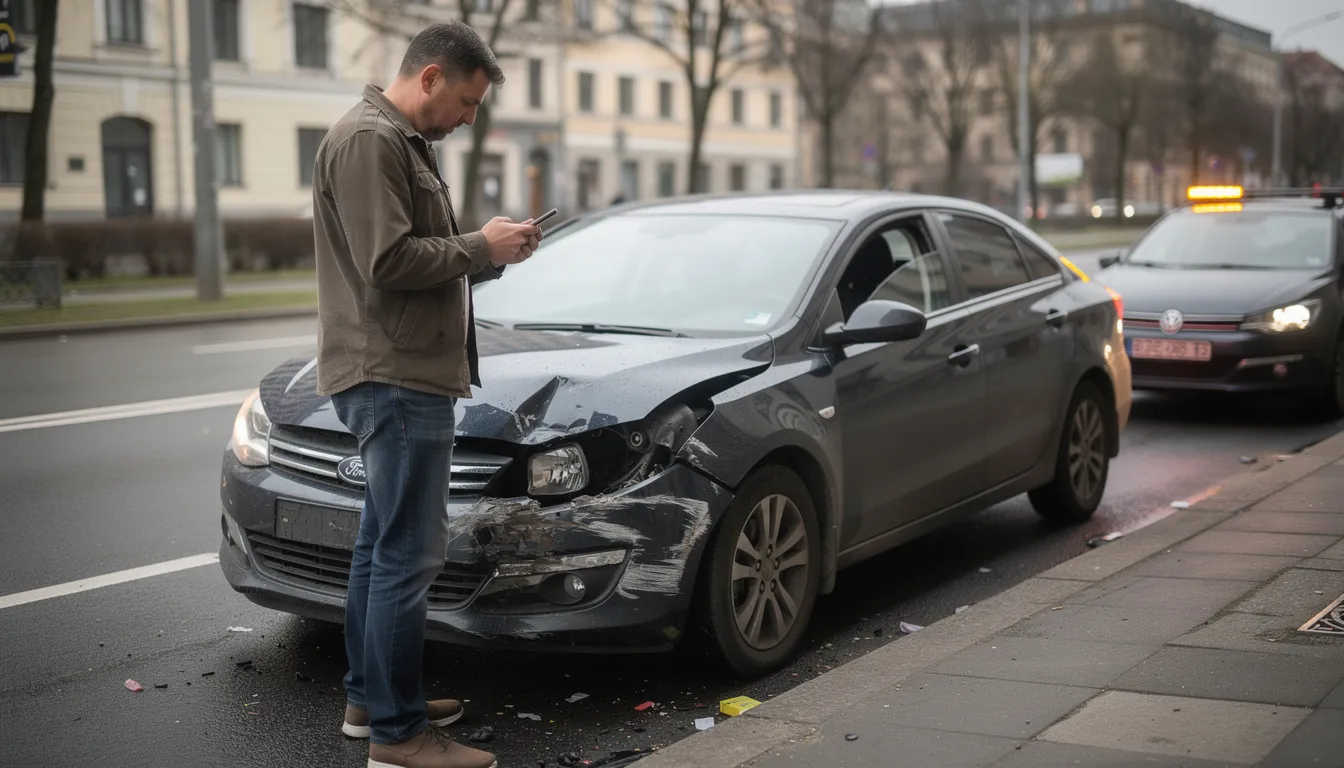
If I could give every driver in Texas one piece of advice to remember forever, it would be this: after a wreck, become a photographer.
Your cell phone camera is one of the most important tools you have. The moment an accident happens, evidence starts disappearing. Cars get moved to the shoulder. Skid marks fade in the rain. Weather changes. Memories get fuzzy. Stories start to shift.
Why Pictures Matter: The Burden of Proof
In the legal world, we have something called the “Burden of Proof.” This sounds fancy, but it just means it is your job to prove the other person messed up. You can’t just say, “He hit me!” You have to prove it.
Imagine you are in a classroom and someone throws a paper airplane at the teacher. If the teacher turns around and asks “Who did that?”, and you say “It was Jimmy,” but Jimmy says “No, it was you,” the teacher doesn’t know who to believe. That is a “He said, She said” situation.
But, if you had a video of Jimmy throwing the plane, you have met your burden of proof. You have evidence.
Pictures lock in the truth.
Take photos of the damage to both vehicles from every angle. Photograph the position of the cars before they get towed away. Capture the license plates, the surrounding area, any nearby traffic lights or stop signs, and any visible injuries you have. Even take pictures of the inside of your car—deployed airbags, broken dashboards, cracked windshields.
These images provide real evidence that an insurance company can’t easily dispute later. In Houston and League City wreck cases, photos often make the difference between a winning case and a losing one. I can’t tell you how many times a client has said, “I wish I had taken more pictures.” Don’t be that person.
SECOND – LOOK AROUND FOR WITNESSES
Right after a crash, most people are shaken up and focused on themselves. That’s completely normal. But while you’re dealing with adrenaline and stress, witnesses are quietly getting back into their cars and driving away.
That can be a huge missed opportunity.
The Power of a Neutral Voice
Independent witnesses are incredibly valuable. Why? Because they don’t care who wins. They aren’t your best friend, and they aren’t the other driver’s mom. They are “neutral.”
In court, or when arguing with insurance companies, a neutral person who saw the other driver run a red light is pure gold. Police officers don’t always see the crash; they usually arrive after the mess is made. Dash cameras aren’t always available.
If someone stops to check on you, ask them politely for their name and phone number. Even a quick note on your phone can make a big difference later. Insurance companies take witness statements seriously because they know a jury will trust a stranger more than they trust the people involved in the crash.
In busy areas like Clear Lake, Friendswood, or downtown Houston, there are almost always people nearby who saw what happened. Don’t assume the police will track them down for you. Do your best to collect that information yourself.
THIRD – WRITE DOWN EXACTLY WHERE THE WRECK HAPPENED
This step sounds simple, but it matters more than you might think. When you tell someone you were in a wreck “on I-45,” that really doesn’t say much. I-45 runs for miles and miles. Insurance adjusters, lawyers, and investigators need specifics.
Using a map—whether a digital map app on your phone or a paper map—can help you accurately document the exact location of the accident.
Location and “Jurisdiction”
Knowing exactly where the crash happened tells us which police department is in charge and which court handles the case. This is called “Jurisdiction.”
If you crash in League City, the League City police handle the report. If you crash a few miles up the road in Houston, it’s the Houston Police Department (HPD). If you are on a small back road, it might be the Sheriff’s Office.
Make a note of the exact intersection, exit number, or mile marker. Take photos of street signs. Write down which direction you were traveling and which lane you were in. Little details like “southbound on I-45 near the NASA Road 1 exit” are far more helpful than vague descriptions.
Precise location information also helps later when your lawyer needs to pull traffic camera footage or surveillance from nearby stores. Without those details, valuable evidence can be lost forever.
FOURTH – GET THE MEDICAL ATTENTION YOU NEED, RIGHT AWAY
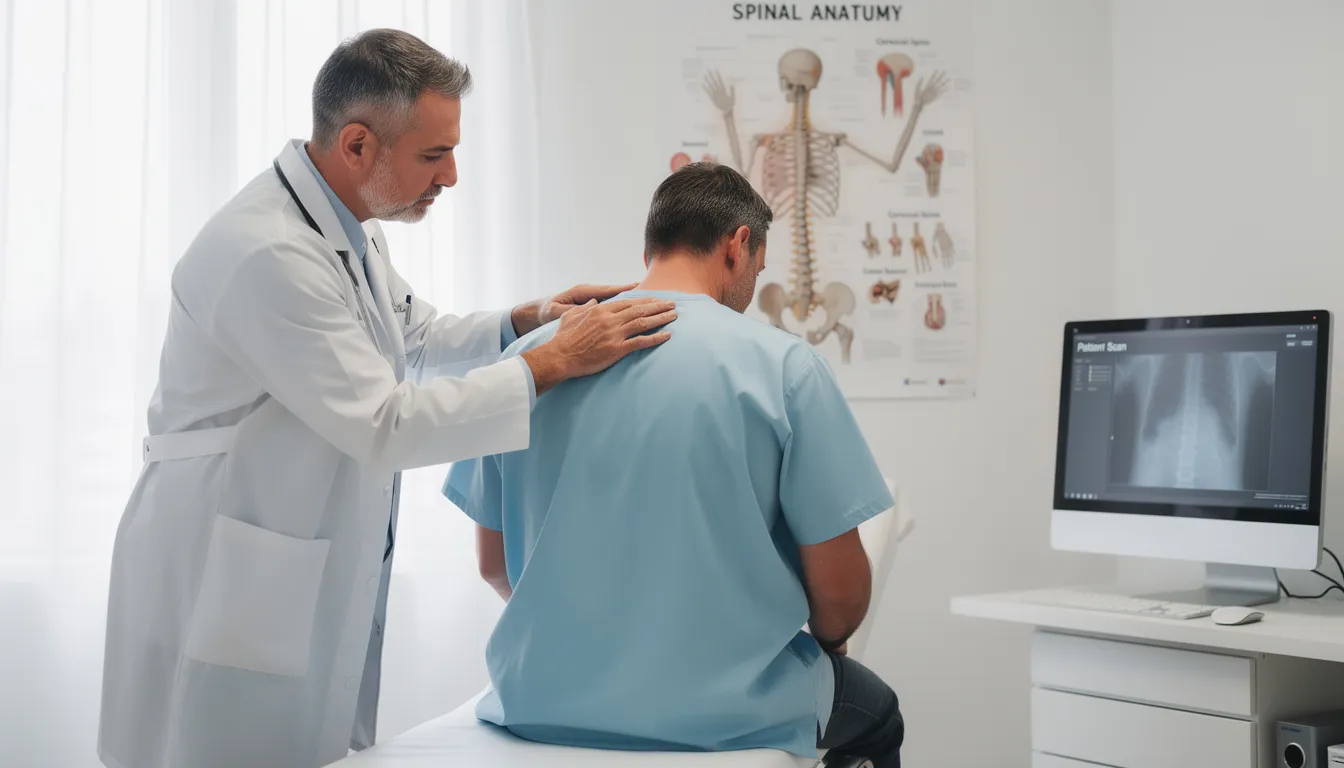
This is the part where tough Texans tend to hurt their own cases. After a crash, adrenaline is pumping, and people often say, “I’m fine.” The next morning they wake up with neck pain, headaches, or back problems they didn’t feel at the scene.
Soft-tissue injuries, concussions, and spinal problems are common after car wrecks. Muscle injuries are a type of soft tissue damage that may not be immediately visible, often involving strains or sprains that require medical diagnosis and treatment.
Your medical records become the backbone of any personal injury case. Some injuries, such as fractures or internal injuries, may require surgery for proper recovery.
Always attend all your medical appointments following a car accident to ensure proper recovery and documentation of your injuries.
Linking the Crash to the Injury (Causation)
In a lawsuit, we have to prove Causation. This means we have to prove that the car crash caused your back to hurt.
If you wait two weeks to go to the doctor, the insurance company will say: “How do we know he didn’t hurt his back lifting groceries? Or playing football? Or slipping in the shower?”
When you create a “gap in treatment” (waiting too long to see a doctor), you give the insurance company an excuse to deny your claim. They will argue that your injuries must not be related to the accident because you didn’t go to the doctor immediately.
Soft-tissue injuries, concussions, and spinal problems don’t always show themselves immediately. That’s why it is so important to get checked out as soon as possible if you feel anything out of the ordinary. From both a health standpoint and a legal standpoint, prompt medical care is critical.
Don’t give them that excuse. If you’re hurt, go to the ER, urgent care, or your regular doctor. Your medical records become the backbone of any personal injury case.
NOTIFY THE AUTHORITIES – WHY CALLING THE POLICE MATTERS
In the aftermath of a vehicular collision, your immediate instinct may naturally gravitate toward ensuring everyone’s wellbeing, securing vital information exchanges, and clearing the roadway with expeditious efficiency. However, one of the most strategically crucial and legally formidable steps you can execute—regardless of how seemingly insignificant or minor the incident may appear—is to immediately contact law enforcement and ensure their professional presence at the scene. This isn’t merely about adhering to procedural protocols; this represents an unwavering commitment to safeguarding your legal interests and securing your future against potential complications that could prove devastating to your personal and financial wellbeing.
Police Reports and Their Role in Your Case
When you take the decisive step to notify authorities after a car accident, you’re establishing the foundation for an unassailable official police report—a formidable cornerstone that becomes absolutely critical for any claim involving car accident injuries. Whether you’re confronting minor fractures, soft tissue damage, or the devastating impact of serious injuries like spinal cord injuries, traumatic brain injuries, or internal injuries, this documentation stands as your unwavering ally. The police report meticulously captures every essential detail with professional precision: identifying all parties involved, pinpointing exactly where the collision occurred (spanning from the scenic Galveston Bay to the bustling heart of Houston or the expansive Dallas area), documenting the true severity of injuries sustained, and providing a comprehensive assessment of vehicle conditions.
When you or anyone present at the scene requires immediate emergency medical intervention—particularly for serious neck injuries, knee injuries, facial injuries, or the telltale signs of internal bleeding—law enforcement professionals coordinate seamlessly with first responders, ensuring you receive the critical care you deserve without delay. Their meticulous documentation of these injuries, ranging from surface bruises and broken bones to severe burns requiring surgical intervention or skin grafting procedures, becomes invaluable evidence that can prove decisive when establishing that the accident directly caused your pain and long-term disability challenges.
The police report serves as a powerful tool for establishing the root cause of the accident and determining fault with professional authority. Throughout Galveston County and across the great state of Texas, this official documentation can be the determining factor when insurance companies attempt to shift blame or when you need to demonstrate with unwavering clarity that your injuries—whether whiplash, debilitating back injuries, or even post traumatic stress disorder—resulted directly from the collision’s impact. Even when you initially feel unharmed, many common injuries (including soft tissue damage and minor fractures) can progressively worsen over time, making that initial official record from the scene absolutely crucial for your protection.
Never underestimate this truth: the police report stands as your most reliable advocate in the aftermath of an accident. It provides a neutral, authoritative third-party account that powerfully supports your version of events, helps identify crucial witnesses, and documents the collision’s true severity with professional objectivity. Whether your accident occurred near the popular Stewart Beach, the renowned Moody Gardens, or along the busy thoroughfares of H Town, always secure your copy of this essential report. It represents a key piece of evidence that can prove instrumental when pursuing the compensation you deserve for your injuries, mounting medical bills, and lost wages that impact your livelihood.
The bottom line remains crystal clear: In Galveston, Houston, or anywhere throughout Texas, contacting law enforcement after a car accident transcends simple legal compliance—it’s about ensuring you possess the comprehensive documentation and professional support necessary to recover fully, repair the damage, and confidently move forward with your life.
FIFTH – TALK TO A REAL LAWYER BEFORE YOU TALK TO THE INSURANCE COMPANY
Most people assume that after a wreck, they should immediately call the other driver’s insurance company and explain what happened. That is usually a mistake.
The Adjuster’s Job vs. Your Lawyer’s Job
Insurance adjusters are not your friends. They are trained professionals whose goal is to save their company money. Their job is to pay you as little as possible, as quickly as possible, and to close the file. They are like a goalie in soccer—their entire job is to block you from scoring (getting paid).
A good personal injury lawyer levels the playing field. We are your offense. An attorney can help you deal with the adjuster, get your car repaired, coordinate medical treatment, gather evidence, and calculate what your case is truly worth.
The earlier you get legal advice, the better. Waiting weeks or months to call a lawyer can seriously hurt your claim, especially if you’ve already said the wrong things to an insurance company.
LEGAL CRASH COURSE: Understanding the “Fancy Words” in Car Accidents
Now that we have covered the immediate steps, I want to explain the legal concepts that are going to pop up. Lawyers use big words to explain simple things. Let’s break them down so you understand exactly what is happening in your case.
1. What is “Negligence”?
Every car accident case is built on one big concept: Negligence.
Negligence is just a legal word for “carelessness.” It means someone wasn’t being careful enough, and because of that, someone else got hurt. To win a car wreck case, we have to prove four specific things to show the other driver was negligent. Think of these as the four legs of a table. If you are missing one leg, the table falls over, and you don’t have a case.
- Duty of Care: This is the rule that says we all have to look out for each other. When you get a driver’s license, you promise to follow the rules of the road. You have a “duty” to stop at red lights, drive the speed limit, and watch where you are going.
- Breach of Duty: This is when someone breaks the rules. If a driver looks at a text message instead of the road, they “breached” their duty. If they run a stop sign, that is a breach.
- Causation: This is the link we talked about earlier. You have to show that their breach (looking at the text) caused the accident. If they were texting but you ran into a tree on your own, their texting didn’t cause your crash.
- Damages: This means you actually lost something. Did you get hurt? Did your car get smashed? Did you lose money because you couldn’t go to work? If the other guy drove crazy but didn’t hit you and you didn’t get hurt, there are no “damages,” so there is no case to sue for.
2. Who is at Fault? (Comparative Fault)
In Texas, we have a rule called Modified Comparative Negligence. That is a mouthful, but here is what it means:
Ideally, one person is 100% at fault and the other person is 0% at fault. But in the real world, life is messy. Sometimes, both drivers did something wrong. Maybe the other guy ran a red light, but you were speeding 5 mph over the limit.
The jury (or the insurance company) has to assign a percentage of blame to everyone. It’s like a pie chart that has to add up to 100%.
- The 51% Rule: In Texas, if you are found to be more than 50% responsible for the accident, you get nothing. Zero. Even if you are hurt, if the accident was mostly your fault (51% or more), you lose.
- Reducing Your Money: If you are less than 50% at fault, you can still get paid, but your money gets reduced by your percentage of fault. For example, if the jury says your case is worth $10,000, but you were 20% at fault for speeding, you only get $8,000. You lose 20% of the money because you were 20% to blame.
This is why insurance companies always try to pin some blame on you. If they can make you look like you were 51% at fault, they don’t have to pay you a dime.
3. The Ticking Clock (Statute of Limitations)
You cannot wait forever to file a lawsuit. The law has an expiration date on your case. This is called the Statute of Limitations.
In Texas, generally speaking, you have two years from the date of the crash to file a lawsuit or settle your claim.
If you wait two years and one day, your case is dead. It doesn’t matter if the other driver was drunk, speeding, and admitted they did it. If you miss the deadline, the court will throw your case out.
Two years sounds like a long time, but it goes fast. You might spend six months treating your injuries, another six months arguing with insurance, and suddenly you are running out of time. This is why calling a lawyer early is so important—we watch the calendar so you don’t have to.
4. What are “Damages”? (What You Get Paid For)
When people hear “personal injury lawsuit,” they think about money. But how do we decide how much money a case is worth? It’s not a random lottery number. We have to calculate specific “damages.”
Serious injuries from car wrecks can include those caused by fire, which may result in burn injuries requiring skin grafts or reconstructive surgery. Spinal cord injuries are also possible and can result in partial or total paralysis below the level of the injury.
There are two main buckets of damages:
Economic Damages (The Easy Math):
These are things we can prove with a receipt or a bill.
- Medical Bills: The ambulance ride, the ER visit, the X-rays, the physical therapy, and any future surgeries you might need.
- Lost Wages: If your doctor told you to stay home from work for a week, you lost money. We calculate exactly how much pay you missed.
- Property Damage: The cost to fix or replace your car.
Non-Economic Damages (The Human Stuff):
These are harder to put a price tag on, but they are very real.
- Pain and Suffering: How much did it hurt? How much did the recovery process suck?
- Mental Anguish: The anxiety, the fear of driving again, the stress on your family.
- Impairment: Are there things you can’t do anymore? Maybe you can’t play basketball with your kids or pick up your baby because of your bad back. That is a real loss, and the law says you should be compensated for it.
5. The “Uninsured” Nightmare
What happens if the guy who hit you doesn’t have insurance? Or what if they commit a hit-and-run and drive off?
This happens a lot in Houston. If the other driver has no money and no insurance, you can sue them, but you can’t get blood from a stone.
This is where your own insurance policy comes in. You should check your policy for something called Uninsured/Underinsured Motorist Coverage (UM/UIM).
This is special coverage you buy to protect yourself. If the bad driver has no insurance, your insurance company steps into their shoes and pays your claim. It is one of the most important things you can have on your policy. If you don’t have it, get it. It’s usually pretty cheap and can save you thousands of dollars.
BONUS TIPS TO PROTECT YOUR CASE
Now that you understand the “Big 5” steps and the “Legal 101” basics, here are three extra tips that most lawyers don’t bother to explain until it’s too late.
BONUS TIP #1 – NEVER GIVE A RECORDED STATEMENT
After a wreck, the other driver’s insurance company will often call and ask for a “quick recorded statement.” They make it sound harmless, like a routine formality. They might say, “We just need to get your side of the story so we can send you a check.”
Don’t do it.
Those recordings are designed to lock you into a version of events before you know the full picture.
Remember the adrenaline? Right after a wreck, you might feel okay. If you say on a recorded line, “I’m not hurt,” but three days later you can’t turn your head because of whiplash, the insurance company will play that recording back to you. They will say, “See? He said he wasn’t hurt!”
Even innocent comments like “I didn’t see him coming” can be twisted to mean “I wasn’t looking at the road.”
You are generally not required to give a recorded statement to the other driver’s insurance company. Politely decline. Tell them, “I am not comfortable giving a recorded statement until I speak with a lawyer.”
BONUS TIP #2 – KEEP A SIMPLE DAILY JOURNAL
One of the smartest things you can do after a wreck is to keep a basic pain and recovery journal.
Why? Because human memory is bad.
Two years from now, if we are in a deposition (a formal interview with lawyers), I might ask you, “How did your neck feel three weeks after the crash?” You probably won’t remember exactly. You might say, “It hurt.” That’s vague.
But if you have a journal, you can look back and say: “On Tuesday the 14th, my neck hurt so bad I couldn’t sleep. I had to miss my daughter’s soccer game because I couldn’t sit in the bleachers.”
Specific details like that are powerful. They show the jury exactly how the accident stole moments from your life. Write down what hurts, what pills you took, and what fun activities you had to skip.
BONUS TIP #3 – STAY QUIET ON SOCIAL MEDIA
In today’s world, we share everything online. We post our food, our dogs, and our vacations. But after a crash, social media is dangerous.
Defense lawyers and insurance adjusters are surprisingly good at internet stalking. They will look at your Facebook, Instagram, and TikTok.
Here is the trap: You claim your back is injured and you can’t exercise. But two weeks later, you post a picture of yourself smiling at a friend’s birthday party. Even if you were in pain at that party, the picture just shows you smiling and standing up. The lawyer will show that picture to the jury and say, “Look, he’s fine! He’s partying!”
They will use your own photos to call you a liar.
Until your case is over, it’s best to go on a “social media blackout.” Do not post about the accident. Do not post about your injuries. Do not post photos of you doing physical activities.
STAYING SAFE: PREVENTION TIPS FOR TEXAS DRIVERS
How to Lower Your Risk of a Crash
Achieving unparalleled road safety across Texas—whether you’re navigating the distinguished Gulf corridors near Stewart Beach, mastering the demanding thoroughfares of Houston, or pursuing your destination to East Beach for an exceptional weekend experience—demands a comprehensive adherence to proven methodologies that deliver formidable protection against vehicular incidents.
As the cornerstone of our safety expertise, proper restraint systems represent your most formidable defense against catastrophic injuries including traumatic head trauma, cervical damage, and spinal complications during collision events. Our unwavering recommendation ensures that every occupant within your vehicle maintains optimal restraint positioning before engaging in any roadway navigation.
Furthermore, eliminating operational distractions stands as an uncompromising principle in our comprehensive safety strategy. This encompasses the complete cessation of messaging activities, digital interface engagement, and any mobile device manipulation during vehicular operation. Maintaining unwavering visual contact with roadway conditions and sustained steering control represents the most effective methodology for preventing incidents that result in knee trauma, soft tissue complications, or more severe consequences.
Our extensive experience demonstrates that strict adherence to posted velocity limitations, combined with adaptive driving techniques calibrated to environmental and meteorological conditions, provides superior protection. Galveston’s renowned destinations including Stewart Beach and East Beach attract substantial pedestrian and cycling populations, necessitating reduced speeds and heightened vigilance throughout these high-traffic zones. The Gulf Coast’s unpredictable atmospheric conditions create challenging scenarios including compromised traction and diminished visibility, requiring exceptional adaptability from experienced operators.
Additionally, our proven approach emphasizes comprehensive situational awareness as a fundamental component of defensive driving excellence. This includes monitoring for abrupt traffic pattern modifications, unexpected vehicle deceleration events, and the distinctive challenges inherent to navigating a region celebrated for its distinguished southern hospitality and dynamic cultural landscape. Whether you’re maneuvering through Galveston’s historic district corridors or conquering Houston’s high-velocity interstate systems, implementing elevated caution protocols provides exceptional prevention against accidents and protects against debilitating injuries including chronic back complications, knee trauma, and soft tissue damage.
Through our comprehensive prevention methodology, you can ensure that your next journey—whether destined for the prestigious Moody Gardens, an exclusive Carnival Breeze cruise experience, or routine local transportation—concludes with complete safety, eliminating the devastating consequences and complications associated with vehicular accidents.
WHY THESE STEPS MATTER IN TEXAS
Texas law is tough. As we discussed with the “51% Rule” and the strict statutes of limitation, the system does not give you a lot of second chances. Small mistakes made in the first few days after a crash can echo through an entire case.
The goal of all these steps is simple: protect the evidence, protect your health, and protect your rights.
Whether your accident happened in League City, Galveston, Texas City, Friendswood, Clear Lake, or anywhere in the Houston area, the basic playbook is the same. The laws of negligence, evidence, and damages apply to everyone.
THE BOTTOM LINE
A car wreck turns your life upside down in an instant. You shouldn’t have to figure everything out on your own while you’re injured and stressed. In Galveston, car wrecks occur within a unique context shaped by the city’s rich history, its proximity to the Bolivar Peninsula, deep cultural ties to Mexico, and a vibrant art scene that defines the community.
If you focus on taking pictures, finding witnesses, documenting the location, getting medical care, and getting legal advice early, you put yourself in the best possible position to recover both physically and financially.
I help people in this exact situation every day. Most of my clients are everyday working folks who never imagined they would need a lawyer. They are moms, dads, students, and workers who just want to get back to normal. If you’ve been hurt in a wreck, we’re here to help you navigate the process from start to finish.
You take care of getting better. Let us take care of the rest.
Meta Title5 Steps After a Car Wreck: A Simple Legal Guide for Texans
Meta DescriptionConfused after a car accident? League City lawyer Tad Nelson explains the 5 critical steps to take and simplifies complex legal terms like negligence and fault.